Ebola: World Bank will provide seeds to farmers in West Africa to ward off hunger
“Agriculture is the lifeline of the economies of Guinea, Liberia and Sierra Leone,” said Makhtar Diop, World Bank Vice-President for Africa. “By speeding supplies of urgently needed seeds of major food crops to communities in West Africa, we are jumpstarting recovery in rural areas and preventing the looming specter of hunger in the countries hardest hit by Ebola.”
According to the World Bank, “more than one million people could go hungry unless they have reliable access to food and emergency measures are taken immediately to safeguard crop and livestock production.”
A recent World Bank Group report shows that the Ebola crisis has taken a heavy toll on the economies in all three countries, and the agriculture and food sectors have been particularly hard hit.
“Reports show that desperate farming families have resorted to eating stored seed originally intended for use in the next cropping cycle. Rural flight has caused harvest-ready crops to wither in the fields,” the World Bank said in its announcement.
The funds in the amount of up to $15 million, in the form of grants financed by the International Development Association (IDA) and the Ebola Recovery and Reconstruction Trust Fund, will also be used to purchase fertilizer required to multiply foundation seed to meet tight planting season deadlines and help lay the foundations for sustained recovery, according to the announcement.
Meanwhile, the top United Nations development official, tasked by Secretary-General Ban Ki-moon to lead the Organization’ system-wide Ebola-related recovery planning, is in Guinea on the first leg of her weeklong visit to the region.
As she arrived in the capital, Conakry, Helen Clark, Administrator of the UN Development Program (UNDP), noted that Ebola cases had doubled for a second week in a row. “This terrible disease isn’t beaten yet,” she added.
Meanwhile, the UN mission for Ebola Emergency Response (UNMEER) reported that Sierra Leone has announced that schools will reopen on 30 March, after a seven-month shutdown to limit the spread of the Ebola virus. The UN Children’s Fund (UNICEF) has been leading response partners support authorities with the safe re-opening of schools.
The World Bank Group’s push marks an unprecedented effort through one of its regional programs that spans 13 West African countries, including the three Ebola-hit countries.
Country teams fanned out and identified seed suppliers in neighboring countries. Advance preparations ahead of the planting season include elaborate plans to source seeds from eight countries, completion of needs assessments, sourcing of seed suppliers, and organizing in-country distribution of seeds and fertilizers to farmers in a timely manner.
To enable free movement of seed-laden trucks, travel routes have been pre-arranged and the intergovernmental Economic Community of West African States (ECOWAS) has authorized customs and border control authorities to let the trucks pass without difficulty.
According to the latest estimates by the Food and Agriculture Organization (FAO) and the World Food Programme (WFP), in Guinea, 230,000 people are food insecure and that number could rise to more than 470,000 by March 2015. Similarly, 170,000 people in Liberia are food insecure and absent interventions, the number of hungry people could top 300,000. In Sierra Leone, over 120,000 people are food insecure and their numbers could climb to more than 280,000.
According to the World Bank Group, it has mobilized about $1 billion in financing for the countries hardest hit by the Ebola crisis.
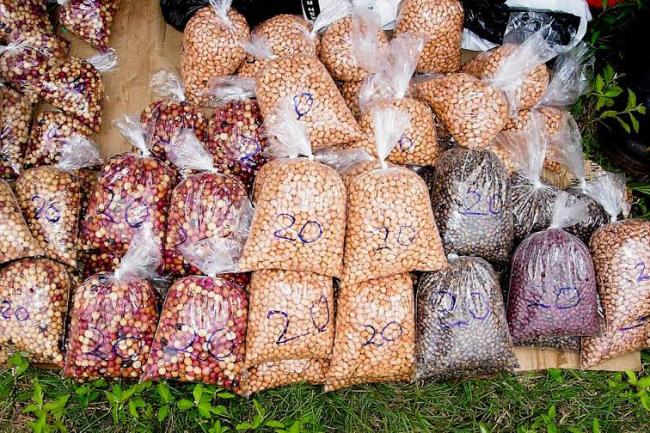
Photo: FAO
Support Our Journalism
We cannot do without you.. your contribution supports unbiased journalism
IBNS is not driven by any ism- not wokeism, not racism, not skewed secularism, not hyper right-wing or left liberal ideals, nor by any hardline religious beliefs or hyper nationalism. We want to serve you good old objective news, as they are. We do not judge or preach. We let people decide for themselves. We only try to present factual and well-sourced news.
Support objective journalism for a small contribution.