 26/11
26/11
US asked India not to start war against Pakistan after 26/11: Chidambaram's admission embarrasses Congress; BJP reacts
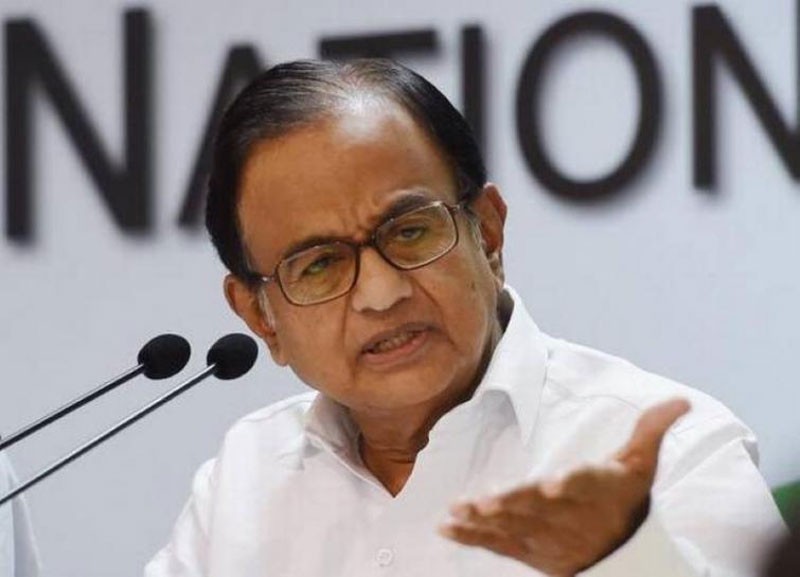
New Delhi/IBNS: Former Union Minister P Chidambaram has admitted that India decided not to act against Pakistan after the 26/11 Mumbai terror attack under pressure from various countries including the United States.
"Condoleezza Rice, who was the then Secretary of State, flew in two or three days after I took over to meet me and the Prime Minister (then, Dr Manmohan Singh) ... to say 'please don't react'. I said this is a decision which the government will take... it did cross my mind that we should do some act of retribution."The whole world descended upon Delhi to tell us that 'don't start a war," the Congress veteran said.
SHOCKING
— BALA (@erbmjha) September 29, 2025
UPA Home Minister P. Chidambaram admits that Congress didn’t avenge 26/11 due to pressure from the USA.
And Congress has the audacity to call Op Sindoor a surrender. pic.twitter.com/QPBJXHxOuj
Slamming the Congress, which was leading the UPA government back in 2008, Union Minister and BJP leader Pralhad Joshi posted on X, "After 17 years, Chidambaram, Former Home Minister admits what the nation knew — 26/11 was mishandled due to pressure from foreign powers. Too little, too late."
After 17 years, Chidambaram, Former Home Minister admits what the nation knew — 26/11 was mishandled due to pressure from foreign powers. Too little, too late.#CongressFailedNationalSecurity pic.twitter.com/bbWWM5X5gu
— Pralhad Joshi (@JoshiPralhad) September 29, 2025
Lok Sabha Leader of Opposition and Congress MP Rahul Gandhi laimed India "surrendered" during May 7-10 military conflict with Pakistan upon the direction of US President Donald Trump.
"Now I understand BJP-RSS very well. They get scared and run away under pressure like they did in front of Trump. Trump said, 'Modi-ji... what are you doing? Narender, surrender'. Narendra Modi-ji said 'ji huzoor' and acted as per Trump's command," Rahul said.
-
Date: 26 November 2008 – 29 November 2008
-
Location: Mumbai, Maharashtra, India
-
Attackers: 10 armed terrorists belonging to the Pakistan-based militant group Lashkar-e-Taiba (LeT).
-
Targets:
-
Taj Mahal Palace Hotel
-
Oberoi Trident Hotel
-
CST (Chhatrapati Shivaji Maharaj Terminus) railway station
-
Nariman (Chabad) House
-
Leopold Café
-
Several other locations across Mumbai
-
-
Casualties:
-
Over 170 people killed (including civilians, security personnel, and foreigners)
-
More than 300 injured
-
Duration: The siege lasted for about 60 hours until Indian security forces neutralized the terrorists.
- Response:
-
Indian National Security Guard (NSG), Marine Commandos (MARCOS), and Mumbai Police carried out rescue and counter-terrorism operations.
-
Nine terrorists were killed during the operations, and one, Ajmal Kasab, was captured alive.
- Aftermath:
-
Kasab’s trial became highly publicized; he was convicted and executed in 2012.
-
The attack strained India–Pakistan relations further.
-
It led to major reforms in India’s coastal security, counter-terrorism strategies, and intelligence coordination.
Support Our Journalism
We cannot do without you.. your contribution supports unbiased journalism
IBNS is not driven by any ism- not wokeism, not racism, not skewed secularism, not hyper right-wing or left liberal ideals, nor by any hardline religious beliefs or hyper nationalism. We want to serve you good old objective news, as they are. We do not judge or preach. We let people decide for themselves. We only try to present factual and well-sourced news.
Support objective journalism for a small contribution.