 Waqf Act
Supreme Court stays contentious provisions in Waqf Amendment Act that sparked widespread protests
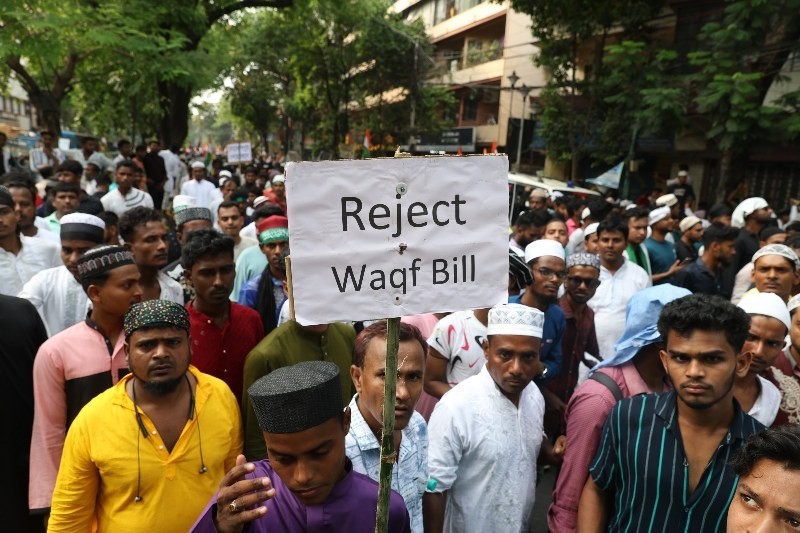
New Delhi/IBNS: The Supreme Court on Monday stayed some contentious provisions in the Waqf (Amendment) Act, which was passed by Parliament earlier this year triggering protests from the Muslim community in several states of the country, media reports said.
The top court has flagged some of the provisions as "arbitrary" exercise of power.
A bench of Chief Justice of India BR Gavai and Justice AG Masih has stayed the sweeping power granted to the District Collector in the new law.
It said as quoted by NDTV, "The Collector cannot be permitted to adjudicate the rights of personal citizens, and this will violate the separation of powers. Till adjudication happens by the tribunal, no third-party rights can be created against any party. The provision dealing with such powers to the Collector shall remain stayed."
The bench further said not more than three non-Muslim members should be inducted to the Waqf board and not more than four non-Muslim members should be included in the Central Waqf Council.
CJI Gavai said the provision empowering a person practicing Islam for at least five years may declare a property as Waqf should be stayed.
The Waqf (Amendment) Bill, 2025 was passed by both Houses of Parliament and got the President’s assent on April 5, 2025.
The law came into effect from April 8, 2025, after official notification in the Gazette of India.
The government earlier argued that by not recognising waqf as a fundamental religious right, it allows for fair and transparent administration of the properties.
The Centre deemed it to be important, as unlike Hinduism, waqfs "include many secular institutions like madrasas, orphanages..."
The government insists that the amendments have been undertaken to ensure the functioning of Waqf Boards is more efficient, inclusive, and transparent.
Key reforms include
- Requirements for greater transparency and digitisation of waqf property records.
- Oversight: requirement that senior officers above collector rank will have a role in determining ownership of disputed waqf properties.
- Inclusion of non-Muslim members (up to four) in the Central Waqf Council, with gender-representation (some of them women) too.
- Abolition of Section 40 — earlier, this section allowed Waqf Boards or Waqf Tribunal to deem certain lands as waqf without formal documentation, which was criticized as misused.
Support Our Journalism
We cannot do without you.. your contribution supports unbiased journalism
IBNS is not driven by any ism- not wokeism, not racism, not skewed secularism, not hyper right-wing or left liberal ideals, nor by any hardline religious beliefs or hyper nationalism. We want to serve you good old objective news, as they are. We do not judge or preach. We let people decide for themselves. We only try to present factual and well-sourced news.
Support objective journalism for a small contribution.