Rajya Sabha passes Quota Bill for economically weak upper castes
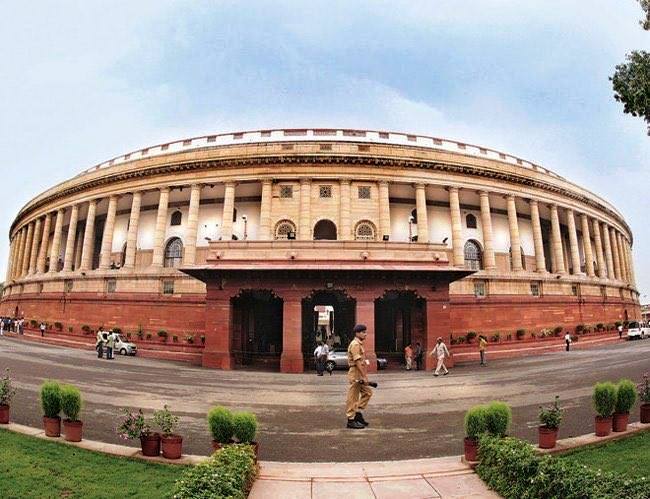
New Delhi, Jan 9 (IBNS): The upper house of the parliament on Wednesday passed the Constitution Amendment Bill, which seeks to provide 10 per cent reservation for economically backward sections in the country in the general category, media reports said.
The demand by some opposition parties that the bill be sent to a select committee for scrutiny, was turned down.
The bill, which was passed in the Lok Sabha on Tuesday, now waits for the President's approval to become a law.
Even as the Opposition claimed that the move is an "election stunt" of the BJP as the country is heading towards the General Elections in less than 100 days, the bill was passed in the Rajya Sabha with the support of the rival outfits. Unlike the lower house, the BJP lacks majority in the Rajya Sabha.
Social Justice and Empowerment Minister Thawarchand Gehlot tabled the Constitution (124th Amendment) Bill, 2019 in the parliament.
In the Rajya Sabha, the bill got the support of 165 MPs. Only seven lawmakers voted against it.
The bill, which is seen as a crucial move by the government before the Lok Sabha polls, is seeking to provide 10 per cent reservation for economically backward sections in the country in the general category in government jobs and even in higher educational institutions.
The bill is likely to benefit a huge section of upper castes including Brahmins, Rajputs (Thakurs), Jats, Marathas, Bhumihars, and several trading castes including Kapus and Kammas.
The economically deprived from other religions will also benefit from the bill's application.
"Delighted the Rajya Sabha has passed The Constitution (One Hundred And Twenty-Fourth Amendment) Bill, 2019. Glad to see such widespread support for the Bill. The House also witnessed a vibrant debate, where several members expressed their insightful opinions," Prime Minister Narendra Modi tweeted.
Delighted the Rajya Sabha has passed The Constitution (One Hundred And Twenty-Fourth Amendment) Bill, 2019.
— Narendra Modi (@narendramodi) January 9, 2019
Glad to see such widespread support for the Bill.
The House also witnessed a vibrant debate, where several members expressed their insightful opinions.
He said the passage of the bill means victory fro social justice.
"Passage of The Constitution (One Hundred And Twenty-Fourth Amendment) Bill, 2019 in both Houses of Parliament is a victory for social justice.
"It ensures a wider canvas for our Yuva Shakti to showcase their prowess and contribute towards India’s transformation.," he tweeted.
Passage of The Constitution (One Hundred And Twenty-Fourth Amendment) Bill, 2019 in both Houses of Parliament is a victory for social justice.
— Narendra Modi (@narendramodi) January 9, 2019
It ensures a wider canvas for our Yuva Shakti to showcase their prowess and contribute towards India’s transformation.
"By passing The Constitution (One Hundred And Twenty-Fourth Amendment) Bill, 2019, we pay tributes to the makers of our Constitution and the great freedom fighters, who envisioned an India that is strong and inclusive," he added.
By passing The Constitution (One Hundred And Twenty-Fourth Amendment) Bill, 2019, we pay tributes to the makers of our Constitution and the great freedom fighters, who envisioned an India that is strong and inclusive.
— Narendra Modi (@narendramodi) January 9, 2019
In the Lok Sabha on Tuesday, 323 lawmakers voted for the bill and only three opposed it.
Support Our Journalism
We cannot do without you.. your contribution supports unbiased journalism
IBNS is not driven by any ism- not wokeism, not racism, not skewed secularism, not hyper right-wing or left liberal ideals, nor by any hardline religious beliefs or hyper nationalism. We want to serve you good old objective news, as they are. We do not judge or preach. We let people decide for themselves. We only try to present factual and well-sourced news.
Support objective journalism for a small contribution.