Rahul Gandhi stirs controversy in Bihar, claims 'army is under control of 10% of the population'
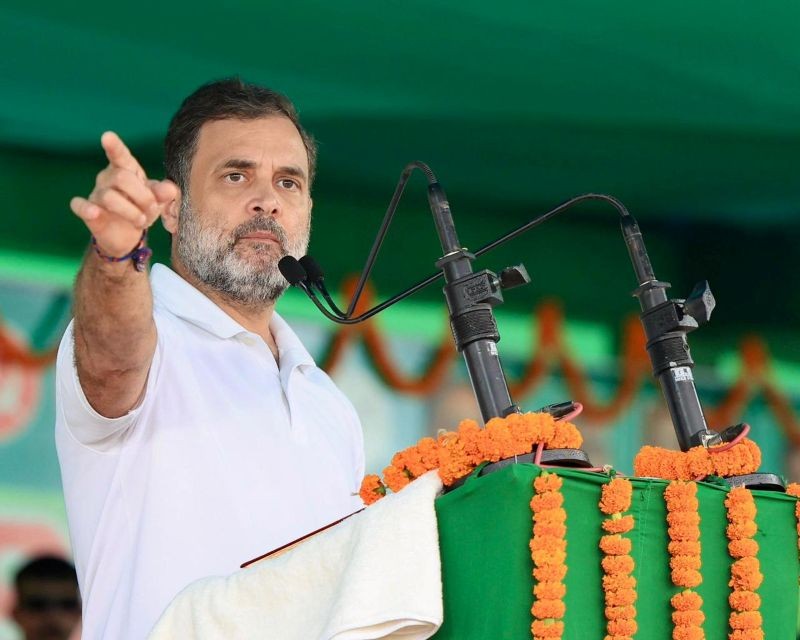
Congress leader Rahul Gandhi on Tuesday stirred a political storm after claiming that the Indian Army is “under the control of 10 percent of the country’s population”, a reference widely interpreted as targeting so-called upper castes.
Speaking at an election rally in Aurangabad, Bihar, ahead of the Assembly polls beginning Thursday, Gandhi said, “Only 10 percent of the country’s population, the upper castes, get opportunities in corporate sectors, bureaucracy, and the judiciary. Even the Army is under their control."
LIVE: Public Meeting | Aurangabad, Bihar https://t.co/p6y2mlvCoi
— Rahul Gandhi (@RahulGandhi) November 4, 2025
"The remaining 90 per cent- backward classes, Dalits, scheduled tribes, and minorities- are nowhere to be seen,” he said.
Gandhi framed the remark within his ongoing call for a national caste census, arguing that the exercise is necessary to ensure social justice and equal participation for all communities.
“We want the data. How many Dalits, OBCs, women, minorities are represented? If 90 per cent of people don’t have participatory rights, the Constitution cannot be protected,” he said.
This is the first time Gandhi has linked the military to caste representation, drawing strong reactions across political lines.
The ruling Bharatiya Janata Party (BJP) condemned Gandhi’s comments, accusing him of “defaming the Army” and “weakening India.”
Union Minister Dharmendra Pradhan said Gandhi was “trying to weaken India and strengthen China,” echoing earlier criticisms following his past remarks on national security.
Gandhi has previously faced judicial scrutiny for similar statements.
In August, the Supreme Court rebuked him for claiming that “Chinese troops are thrashing Indian soldiers in Arunachal Pradesh,” asking,
Earlier, in May, the Allahabad High Court dismissed his plea challenging a summons in a defamation case, noting that freedom of speech does not include the right to malign the armed forces.
The Congress party defended its leader, insisting that Gandhi’s remarks were part of a broader argument for caste-based data collection and social representation.
“The courts or the BJP cannot decide who is a ‘real Indian’,” a party spokesperson said, accusing the ruling party of twisting Gandhi’s words to divert attention from issues of unemployment and inequality.
Support Our Journalism
We cannot do without you.. your contribution supports unbiased journalism
IBNS is not driven by any ism- not wokeism, not racism, not skewed secularism, not hyper right-wing or left liberal ideals, nor by any hardline religious beliefs or hyper nationalism. We want to serve you good old objective news, as they are. We do not judge or preach. We let people decide for themselves. We only try to present factual and well-sourced news.
Support objective journalism for a small contribution.