 Cloud Seeding
No rain for Delhi yet! IIT Kanpur halts cloud seeding trials, says 'insufficient moisture' spoils plan to wash away pollution
New Delhi/IBNS: Cloud seeding trials over Delhi have been put on hold with Indian Institute of Technology (IIT) Kanpur flagging "insufficient moisture" as the reason behind it, media reports said.
The IIT Kanpur team conducted two rounds of cloud seeding trials on Tuesday.
No rain flowed even after the conduction of the trials.
A statement by IIT Kanpur reads as quoted by NDTV, "The cloud-seeding activity planned for today has been put on hold due to insufficient moisture in the clouds. The process is highly dependent on the right atmospheric conditions."
"While rainfall could not be triggered yesterday because moisture levels were around 15 to 20 per cent, the trial delivered valuable insights. Monitoring stations set up across Delhi captured real-time changes in particulate matter and moisture levels. The data shows a measurable reduction of 6 to 10 per cent in PM2.5 and PM10 concentrations, indicating that even under limited moisture conditions, cloud seeding can contribute to improved air quality," the statement added.
"These observations strengthen our planning for future operations and allow us to better identify conditions where this intervention can deliver maximum benefit.
"Such learnings form the foundation for more effective deployments ahead. IIT Kanpur remains committed to advancing this research with scientific discipline and a clear focus on improving environmental outcomes for the National Capital Region," the statement said.
Delhi Environment Minister Manjinder Sirsa told Aaj Tak that more cloud seeding efforts will be made.
"More trials will be held. Eight-nine trials will be held," Sirsa told the broadcaster.
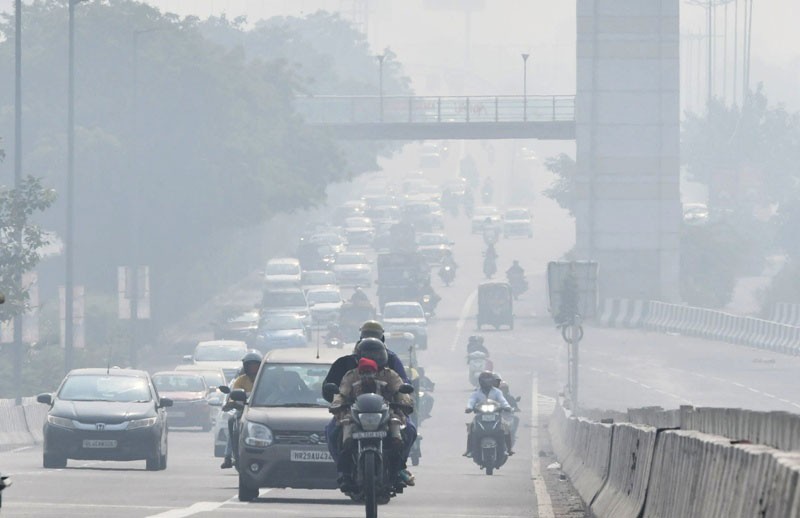
The cloud-seeding trial aimed at inducing rainfall in pollution-hit Delhi was completed on Monday, as the national capital continues to struggle with a thick blanket of toxic smog.
The city is now awaiting rainfall that could help bring temporary relief from deteriorating air quality.
According to sources, rain is not expected before 5 p.m. as the moisture content in the clouds over Delhi remains below 20 per cent. If the exercise fails to trigger precipitation, another flight may be dispatched from Kanpur, the newschannel reported.
The Delhi government signed a memorandum of understanding (MoU) with the IIT Kanpur to carry out five cloud-seeding trials in northwest Delhi between October 1 and November 30.
Delhi experiences high levels of pollution throughout the year, which typically worsen during winter due to crop residue burning in neighbouring states, stagnant air, and the bursting of firecrackers during Diwali.
What is cloud seeding?
Cloud seeding is a weather modification technique that enhances a cloud’s ability to produce rain or snow by introducing tiny ice nuclei into specific types of subfreezing clouds. These nuclei act as a base for raindrops or snowflakes to form.
Once formed, the precipitation particles grow and fall to the ground, potentially increasing rainfall, according to the Desert Research Institute.
Several countries, including China and the United Arab Emirates, have used cloud seeding in recent years to augment rainfall and reduce air pollution.
Support Our Journalism
We cannot do without you.. your contribution supports unbiased journalism
IBNS is not driven by any ism- not wokeism, not racism, not skewed secularism, not hyper right-wing or left liberal ideals, nor by any hardline religious beliefs or hyper nationalism. We want to serve you good old objective news, as they are. We do not judge or preach. We let people decide for themselves. We only try to present factual and well-sourced news.
Support objective journalism for a small contribution.