 Micron
Microchip is the new oil: PM Modi inaugurates Micron’s mega semiconductor plant
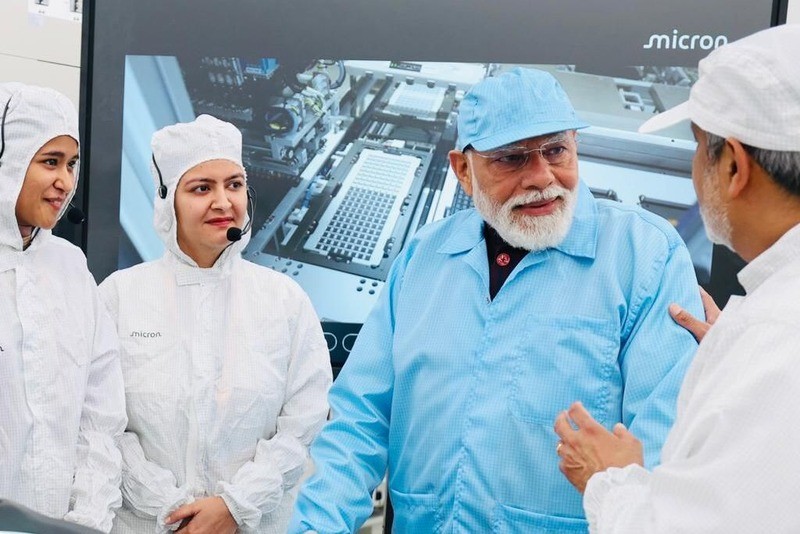
Prime Minister Narendra Modi on Saturday inaugurated Micron’s ATMP (Assembly, Test, Marking, and Packaging) facility in Sanand, Gujarat, marking the commencement of commercial production and a significant milestone in India’s journey toward global technology leadership.
Calling it a historic moment, the Prime Minister said that following the world’s largest and most successful AI Summit, the country is now witnessing another landmark achievement.
“While the AI Summit introduced the world to India’s AI prowess, today is a testament to India’s commitment to technology leadership,” Modi said.
He noted that while India was once primarily known for software and IT services, it is now rapidly strengthening its presence in the hardware sector as well.
“Today, in Sanand, we see the dawn of a new future. The commencement of commercial production at Micron’s ATMP facility will significantly bolster India’s role in the global technology value chain,” he emphasized.
Highlighting what he described as the “New India” mindset, the Prime Minister pointed to the rapid transition from policy formulation to production. He noted that the Memorandum of Understanding was signed in June 2023, followed by the groundbreaking ceremony in September 2023.
“By February 2024, machine installation in the pilot facility had begun, leading to the commencement of commercial production in February 2026,” Modi said, underlining the project’s swift execution.
A proud day for India!
— Narendra Modi (@narendramodi) February 28, 2026
Micron Technology’s Semiconductor ATMP facility was inaugurated in Sanand earlier today.
Here are some glimpses from the occasion…@MicronTech @MicronCEO pic.twitter.com/y4vrYEMhdy
He added that India has significantly streamlined complex regulatory procedures, citing the clearance of Advanced Pricing Agreements (APAs) within months — a process that typically takes three to five years even in developed nations.
“When the intent is clear and the dedication is toward the nation’s rapid development, policies become transparent and decisions gain momentum,” the Prime Minister remarked.
Modi described the facility as a testament to the strong India–USA partnership, particularly in AI and semiconductor technology. Referring to the Pax Silica agreement signed during the AI Summit, he said the two largest democracies are working together to secure and strengthen global supply chains, especially for critical minerals.
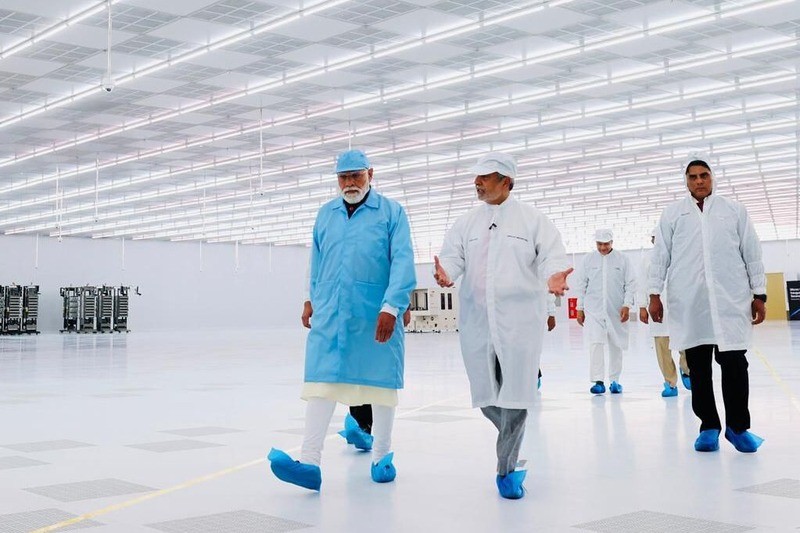 Photo: Narendra Modi/X
Calling this era the century of the AI revolution, Modi described semiconductors as the bridge driving this transformation. Drawing a historical comparison, he said that if oil regulated the 20th century, the microchip will regulate the 21st century.
“A tiny chip connects the Industrial Revolution to the AI Revolution,” he said.
Recalling that India announced its Semiconductor Mission during the COVID-19 pandemic, he said the seeds planted during that challenging period are now bearing fruit.
Reiterating India’s commitment to the sector, the Prime Minister noted that 10 projects have been approved under the Semicon India programme, with three more set to begin production soon across states including Uttar Pradesh, Assam, Odisha, and Punjab.
“This ecosystem is not limited to one region; it is pan-India. New tech hubs for a ‘Viksit Bharat’ are emerging across the country,” Modi said.
With the commencement of commercial production at Micron’s ATMP Facility in Sanand, India will become an integral part of the global semiconductor value chain and our role in this sector will also grow stronger. pic.twitter.com/kpJ7PYOxGR
— Narendra Modi (@narendramodi) February 28, 2026
He emphasized that a semiconductor ecosystem extends beyond a single factory and includes machine manufacturers, design engineers, research institutions, logistics networks, and skilled technicians working in coordination.
“India is focusing on the entire value chain. In this year’s budget, we announced the India Semiconductor Mission 2.0 for this purpose,” he said, adding that rising production will boost demand for domestic materials, components, and services.
Highlighting growing domestic demand, Modi said a large segment of India’s population is becoming first-time gadget users, driving demand across electronics, automobiles, and other technology sectors.
“‘Make in India’ is now in full swing,” he said, noting significant growth in electronics production and exports over the past 11 years. “For investors, both the domestic market and global opportunities are ready.”
Drawing parallels with Sanand’s emergence as an automobile hub, the Prime Minister expressed confidence that the Micron facility will anchor a robust semiconductor ecosystem in the region.
The plant will manufacture DRAM and NAND solutions to power global data centres, AI applications, and mobile devices. He also highlighted that the facility houses one of the world’s largest ATMP cleanrooms and has incorporated sustainability measures, including reduced water consumption.
Praising the Gujarat government’s policies, Modi said reforms in approvals, land allotment, and utility access have strengthened investor confidence. He added that Dholera and Sanand are rapidly developing into semiconductor clusters in western India.
The inauguration of Micron’s semiconductor facility marks a milestone in India’s journey towards technology leadership.
— Narendra Modi (@narendramodi) February 28, 2026
https://t.co/6b9FBoBK8k
Industries supplying key inputs for semiconductor manufacturing — including chemicals and petrochemicals — along with skill development centres and training initiatives, are also being developed simultaneously, he said.
Support Our Journalism
We cannot do without you.. your contribution supports unbiased journalism
IBNS is not driven by any ism- not wokeism, not racism, not skewed secularism, not hyper right-wing or left liberal ideals, nor by any hardline religious beliefs or hyper nationalism. We want to serve you good old objective news, as they are. We do not judge or preach. We let people decide for themselves. We only try to present factual and well-sourced news.
Support objective journalism for a small contribution.