'India was only united under Aurangzeb': Pak Minister Khawaja Asif sparks row with provocative remark
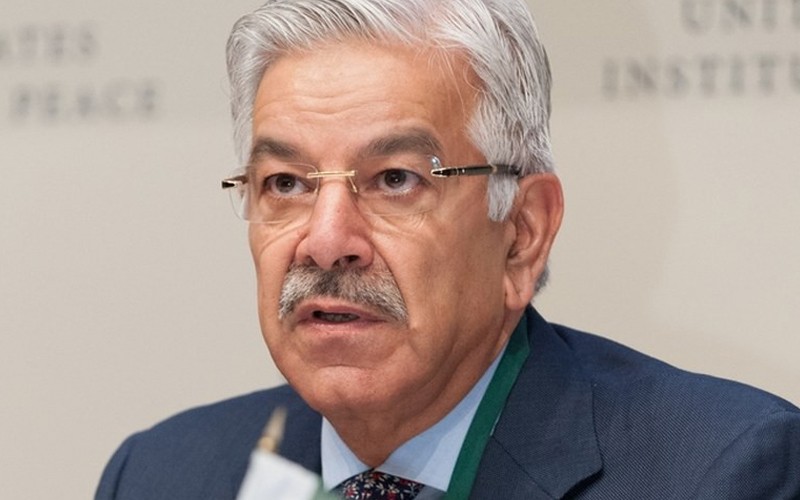
Pakistan’s Defence Minister Khawaja Asif has stirred controversy with a new statement claiming that India “was never truly united” except during the rule of Mughal emperor Aurangzeb.
In an interview with Pakistan’s Samaa TV, Asif also said that “chances of war with India are real,” remarks that come amid renewed tensions between the two nuclear-armed neighbours.
“As history shows, India was never one united nation, except briefly under Aurangzeb. Pakistan was created in the name of Allah. At home, we argue and compete, but in a fight with India, we come together,” Asif said during the interview.
"Chances of war with India are real and I am not denying that": Khawaja Asif, PaK Def Min
— OsintTV 📺 (@OsintTV) October 8, 2025
"History shows that India was never one united nation, except briefly under Aurangzeb. Pakistan was created in the name of Allah. At home we argue and compete. In a fight with India we… pic.twitter.com/e1yAxSTSSx
Historians, however, note that India’s political unity predates the Mughal period by centuries. The Maurya Empire (322–185 BCE), under Emperor Ashoka, unified most of the Indian subcontinent into one state.
Later rulers such as Samudragupta of the Gupta dynasty and Harshavardhana also brought large regions under central rule.
Even within the Mughal era, Emperor Akbar’s reign is widely regarded as a period of consolidation and stability—unlike Aurangzeb’s rule, which was marked by internal rebellions and constant warfare.
Asif’s comments came days after India’s Army Chief General Upendra Dwivedi issued a stern warning to Islamabad to stop supporting terrorism or “risk losing its geographical presence.”
“India is fully prepared this time. We will not show the restraint we exhibited during Operation Sindoor 1.0,” Gen. Dwivedi said.
“This time, the action will be such that Pakistan will have to think whether it wants to exist geographically.”
Asif, however, maintained that Pakistan would respond if provoked. “I do not want escalation, but the risks are real, and I am not denying that. If it comes to war, God willing, we will achieve a better result than before,” he said.
This is not the first time the Pakistani minister has drawn ridicule for controversial remarks. Last year, Asif suggested that flood-affected Pakistanis should “store floodwater in containers” instead of letting it drain away, calling floods a “blessing.”
He also made unsubstantiated claims on international television about shooting down Indian fighter jets—claims he later failed to back with evidence.
The renewed war rhetoric adds to a series of verbal exchanges between India and Pakistan, even as New Delhi maintains its stance that dialogue cannot proceed until Islamabad ends its support for cross-border terrorism.
Support Our Journalism
We cannot do without you.. your contribution supports unbiased journalism
IBNS is not driven by any ism- not wokeism, not racism, not skewed secularism, not hyper right-wing or left liberal ideals, nor by any hardline religious beliefs or hyper nationalism. We want to serve you good old objective news, as they are. We do not judge or preach. We let people decide for themselves. We only try to present factual and well-sourced news.
Support objective journalism for a small contribution.