 India | China
India lost access to 26 of 65 patrol points In Eastern Ladakh: Report
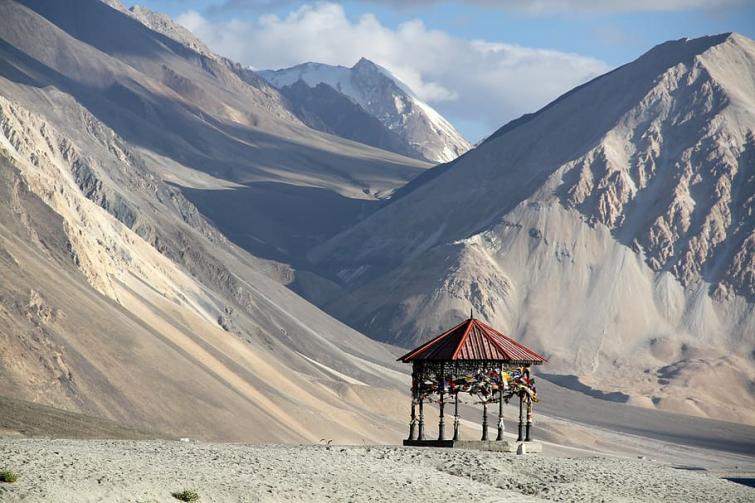
New Delhi/IBNS: India has lost access to 26 of 65 patrolling points in Eastern Ladakh, a report by a senior police officer in the union territory, accessed by NDTV, said, raising worry about new disclosure amid the country's standoff with China.
"Presently there are 65 PPs (Patrolling Points) starting from Karakoram pass to Chumur which are to be patrolled regularly by the ISFs (Indian Security Forces). Out of 65 PPs, our presence is lost in 26 PPs (i.e. PP no. 5-17, 24-32, 37, due to restrictive or no patrolling by the ISFs," PD Nitya, the Superintendent of Police of Leh, Ladakh's main city, wrote according to the research paper accessed by NDTV.
The report was filed at last week's annual conference of India's top police officers in Delhi, attended by Prime Minister Narendra Modi, Union Home Minister Amit Shah and National Security Advisor Ajit Doval.
"Later on, China forces us to accept the fact that as such areas have not seen the presence of ISFs or civilians since long, the Chinese were present in these areas. This leads to a shift in the border under control of ISFs towards Indian side and a "buffer zone" is created in all such pockets which ultimately leads to loss of control over these areas by India. This tactic of PLA (China's People's Liberation Army) to grab land inch-by-inch is known as 'Salami slicing'," it said.
"PLA has taken advantage of the buffer areas in the de-escalation talks by placing their best of cameras on the highest peaks and monitoring the movement of our forces... they object our movement even in the buffer zone, claiming it to be 'their' area of operation and then further ask us to move back to create more 'buffer' areas," the officer wrote.
She said this Chinese strategy was seen in Galwan Valley, the site of a deadly clash in 2020 when 20 Indian troops and at least four Chinese soldiers died in hand-to-hand fighting.
"During an interaction with one senior officer whose unit is based right on forward area, he shared that, if by retreating 400 metres back, we can buy peace with PLA for 4 years, then it's worth it," the report said.
The report comes just over a month after India accused China of trying to "unilaterally change the status quo" on their de-facto border, known as the Line of Actual Control (LAC), as the clashes left troops on both sides injured.
The Dec 9 incident in Arunachal Pradesh was seen as the most serious face-off since the Galwan Valley clash in 2020 which led to a sharp escalation in hostilities between the two countries.
A series of military talks since then followed leading to a careful pullback of troops on both sides.
Support Our Journalism
We cannot do without you.. your contribution supports unbiased journalism
IBNS is not driven by any ism- not wokeism, not racism, not skewed secularism, not hyper right-wing or left liberal ideals, nor by any hardline religious beliefs or hyper nationalism. We want to serve you good old objective news, as they are. We do not judge or preach. We let people decide for themselves. We only try to present factual and well-sourced news.
Support objective journalism for a small contribution.