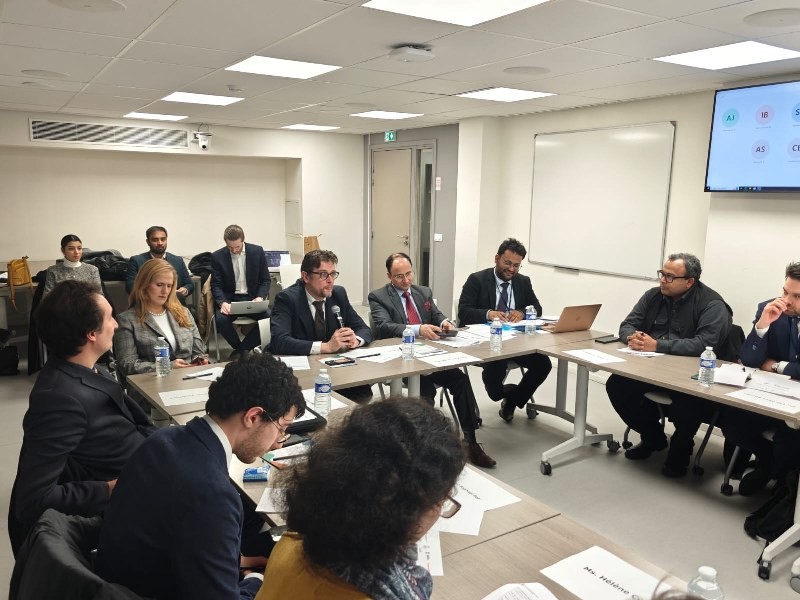
Experts discuss responsible AI development, deployment during India-France Policy Roundtable
The Office of the Principal Scientific Adviser (PSA) to the Government of India in partnership with Indian Institute of Science (IISc), Bengaluru, IndiaAI Mission and Sciences Po Paris organised an official side-event to the AI Action Summit 2025, titled ‘2nd India-France AI Policy Roundtable’ on Feb 10 at the Sciences Po Paris university campus.
The roundtable discussion started with opening remarks by PSA Prof. Ajay Kumar Sood where he highlighted India's priorities in global AI policy and governance, including responsible AI development and deployment, equitable benefit sharing, adoption of a techno-legal framework for AI governance, interoperable data flows, and collaboration on AI safety, research, and innovation.
Prof. Sood also stressed upon the potential for India and France to synergize on various policy positions and technological initiatives, fostering benefits not only at the bilateral level but also on a global scale by leveraging complementary knowledge and skill sets.
Amit A. Shukla, Joint Secretary, Cyber Diplomacy Division, Ministry of External Affairs of the Government of India and H.E. Henri Verdier, Ambassador for Digital Affairs, French Ministry for Europe and Foreign Affairs gave co-chairs remarks highlighting (a) DPI for AI; (b) AI foundation models; (c) global AI governance and (d) Priority areas, such as integrating AI in addressing global challenges. They also mentioned cross-border data flows lacking arbitration mechanisms and the importance of aligned views on data sovereignty.
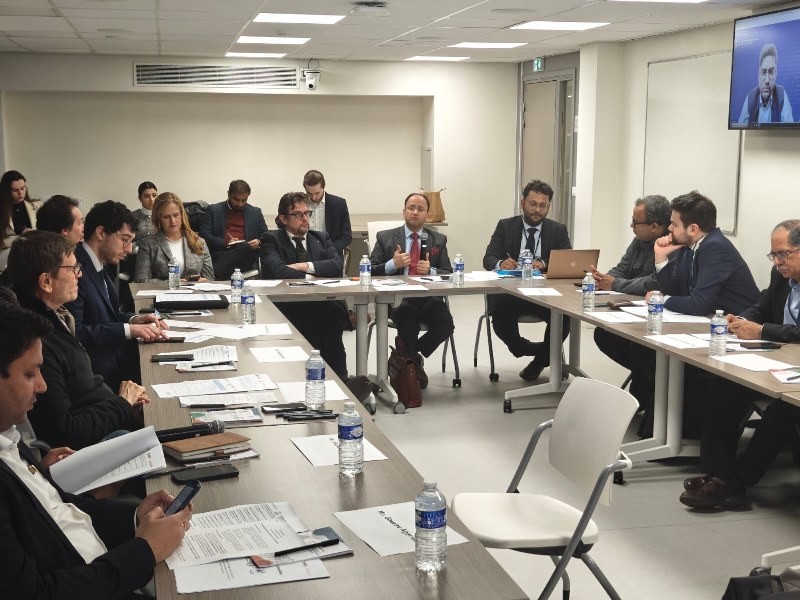
The interventions emphasized the need for democratized access to AI resources, and capacity building while recognizing the importance of techno-legal frameworks.
The participants highlighted the significance of sovereign AI models, ethical AI deployment and the need to define globally accepted terminologies and standards.
Speakers also aligned on multilingual LLMs, federated AI compute infrastructure, and interoperable access to AI research, datasets, and high-performance computing resources.
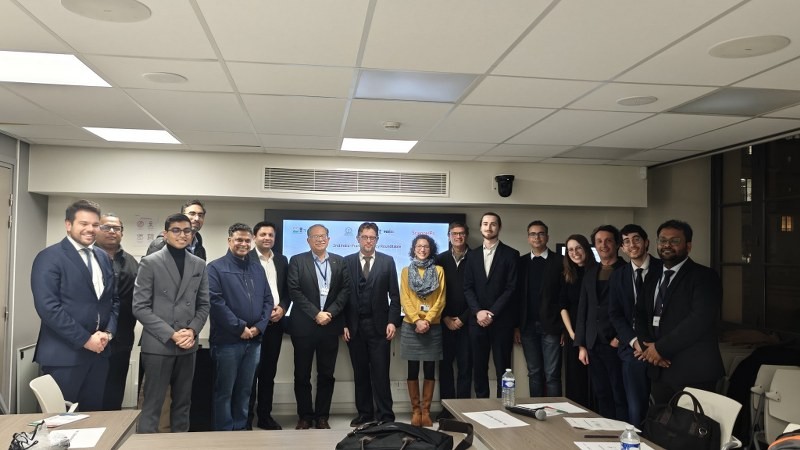
The meeting also covered key discussions on collaboration between India and France.
Opportunities mentioned included creating indigenous foundation models and adopting a balanced governance approach to minimize risks while fostering innovation.
Sustainable AI and energy-efficient computing was highlighted, alongside the importance of cross-border cooperation in AI research, datasets, and startups.
The conversation also touched on AI’s societal impact, data governance, and the role of global institutions in shaping AI safety frameworks.
The Second Roundtable built upon key objectives from the First Roundtable organised in IISc, Bengaluru during Technology Dialogue 2025 on 25th January 2025.
The First Roundtable discussion focussed on inclusive AI frameworks, diverse datasets, infrastructure and skills, and foundational models.
It also addressed governance and innovation, public-private partnerships, sustainability and health, and academic and data collaboration.
Both discussions highlighted ethical and responsible AI, along with sector-specific and long-term goals.
Support Our Journalism
We cannot do without you.. your contribution supports unbiased journalism
IBNS is not driven by any ism- not wokeism, not racism, not skewed secularism, not hyper right-wing or left liberal ideals, nor by any hardline religious beliefs or hyper nationalism. We want to serve you good old objective news, as they are. We do not judge or preach. We let people decide for themselves. We only try to present factual and well-sourced news.
Support objective journalism for a small contribution.