 Economic liberalisation
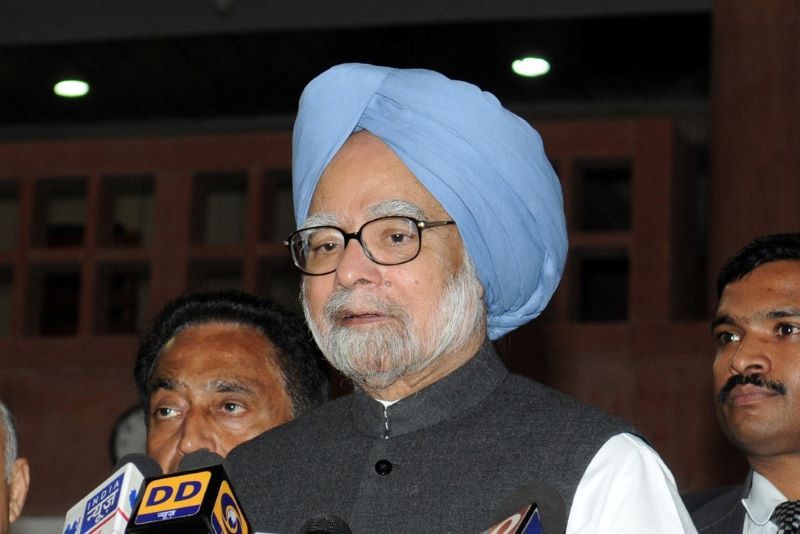
Centre hails former PM Manmohan Singh for liberating economy in 1991
New Delhi/IBNS: The Bharatiya Janata Party (BJP)-led central government hailed former Prime Minister PV Narasimha Rao and his then finance minister, Manmohan Singh, for their pivotal roles for bringing in economic liberalisation and opening up the Indian economy in 1991.
During a hearing in the Supreme Court, the government said that the move effectively marked the end of the era that was marked by 'licence raj'.
Solicitor General Tushar Mehta informed a nine-judge bench led by Chief Justice DY Chandrachud that the economic reforms that followed Rao and Singh's decisions had liberalised numerous laws, including the company law and the Trade Practices Act MRTP.
However, he highlighted that subsequent governments over the following three decades did not see the need to amend the Industry (Development and Regulation) Act, 1951.
The response came after the bench criticised of the IDRA, 1951, describing it as archaic and indicative of the restrictive policies of the 'licence raj' era.
Mehta emphasised that despite the winds of change brought by economic reforms, the IDRA remained untouched, allowing the Centre to maintain significant control over various industries.
In 1991, faced with a foreign reserves crisis, the Narasimha Rao-led government introduced three transformative economic reforms: globalisation, liberalisation, and privatisation.
Mehta also clarified that the Centre's withdrawal from controlling industries did not indicate a lack of regulatory authority.
He stressed that the Centre retained the power to regulate industries in the national interest, particularly during emergencies like the Covid-19 pandemic.
Mehta elaborated that had the Union government not had the authority to regulate industrial alcohol, especially for producing hand sanitizers during the pandemic, the robust response to the crisis would have been compromised.
Support Our Journalism
We cannot do without you.. your contribution supports unbiased journalism
IBNS is not driven by any ism- not wokeism, not racism, not skewed secularism, not hyper right-wing or left liberal ideals, nor by any hardline religious beliefs or hyper nationalism. We want to serve you good old objective news, as they are. We do not judge or preach. We let people decide for themselves. We only try to present factual and well-sourced news.
Support objective journalism for a small contribution.