 Union Budget
What is ISM 2.0? Budget 2026 expands India’s semiconductor push
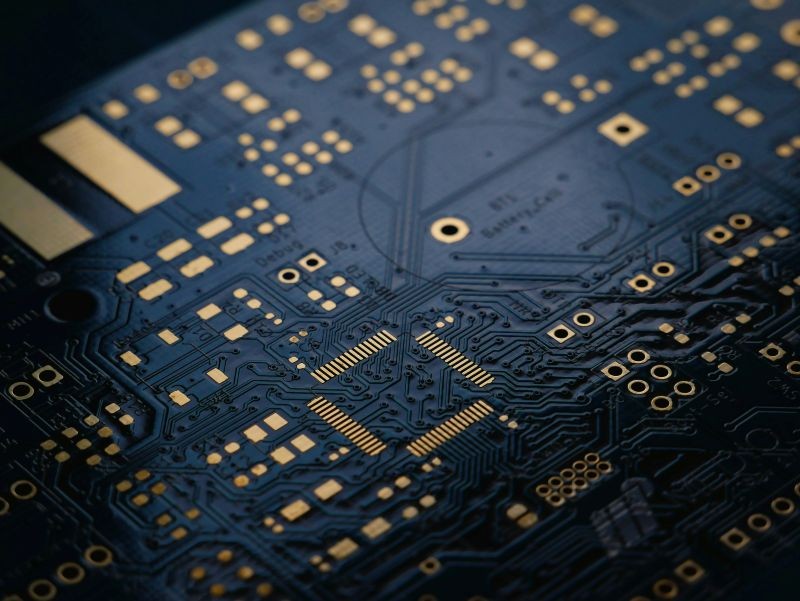
Finance Minister Nirmala Sitharaman on Sunday announced the launch of India Semiconductor Mission (ISM) 2.0 while presenting the Union Budget 2026–27, aimed at strengthening domestic production of semiconductor equipment and materials, developing full-stack Indian intellectual property (IP), and fortifying supply chains.
The Budget also outlined significant measures to accelerate growth in India’s Electronics and Information Technology (IT) sector, with a focus on industry-led research and training centres to build advanced technology capabilities and a skilled workforce. A provision of ₹1,000 crore has been made for this initiative in FY 2026–27. ISM 2.0 will build upon the gains made under ISM 1.0, which expanded India’s semiconductor ecosystem.
The Electronics Components Manufacturing Scheme (ECMS), launched in April 2025, has already attracted investment commitments exceeding its initial targets. In view of strong industry response, the government has proposed increasing its outlay to ₹40,000 crore to capitalise on the momentum.
Support for IT and IT-enabled Services
To strengthen India’s position as a global IT hub and provide tax certainty, the Budget proposes new safe harbour provisions for IT and IT-enabled services (ITeS), with higher thresholds and competitive margins.
Union Budget 2026-27 lays emphasis on Scaling up manufacturing in 7 strategic and frontier sectors
— PIB India (@PIB_India) February 1, 2026
🔸To develop India as a global Biopharma manufacturing hub, the Budget proposes Biopharma SHAKTI with an outlay of ₹ 10,000 crores over next 5 years
🔸India Semiconductor Mission… pic.twitter.com/eq2VVCFPyG
The Ministry of Finance stated that software development services, IT-enabled services, knowledge process outsourcing, and contract R&D services related to software development will now be clubbed under a single category — Information Technology Services — with a common safe harbour margin of 15.5%.
The turnover threshold for availing safe harbour has been proposed to be raised substantially from ₹300 crore to ₹2,000 crore. Approvals under the safe harbour regime will be granted through an automated, rule-based process without the need for scrutiny by a tax officer. Once opted for, the safe harbour can be continued for five consecutive years at the company’s discretion.
For IT services companies seeking Advance Pricing Agreements (APAs), the government has proposed to fast-track the unilateral APA process, with an endeavour to conclude cases within two years, extendable by six months at the taxpayer’s request. The facility of filing modified returns, currently available to entities entering into an APA, is also proposed to be extended to their associated enterprises.
Data Centre and Cloud Incentives
Recognising the need to boost critical digital infrastructure, the Budget proposes a tax holiday until 2047 for foreign companies providing cloud services globally using data centre infrastructure located in India. Such companies will be required to serve Indian customers through an Indian reseller entity.

Additionally, a safe harbour margin of 15% on cost has been proposed where the data centre service provider in India is a related entity.
Education and Emerging Technologies
The Budget also proposes setting up a high-powered ‘Education to Employment and Enterprise’ Standing Committee to recommend measures aimed at strengthening the services sector as a core driver of Viksit Bharat. The committee will assess the impact of emerging technologies, including AI, on employment and skills, and suggest appropriate policy measures.
Industry Reactions
Mohammad Athar Saif, Partner and Leader, CP&I and Industrial Development, PwC India, said the launch of Semiconductor Mission 2.0, enhanced support for electronics manufacturing, plans to revitalise industrial clusters, and a push on critical minerals could significantly strengthen India’s manufacturing ecosystem.
“These measures could accelerate India’s transition into a competitive global manufacturing destination and advance self-reliance in emerging industries such as semiconductors, electronics, and advanced batteries, in line with the vision of Viksit Bharat@2047,” he said.
Sujay Shetty, Managing Director (ESDM & Semiconductor), PwC India, said the launch of ISM 2.0 represents a transformative step for India’s semiconductor sector.
“The focus on domestic production of equipment and materials, full-stack design capabilities, Indian IP development, resilient supply chains, intensified industry-led R&D, and skilled workforce development could significantly elevate India’s position in the global semiconductor value chain,” he said.
Support Our Journalism
We cannot do without you.. your contribution supports unbiased journalism
IBNS is not driven by any ism- not wokeism, not racism, not skewed secularism, not hyper right-wing or left liberal ideals, nor by any hardline religious beliefs or hyper nationalism. We want to serve you good old objective news, as they are. We do not judge or preach. We let people decide for themselves. We only try to present factual and well-sourced news.
Support objective journalism for a small contribution.