Online predators put millions of children at risk during COVID-19 pandemic lockdown
New York/IBNS: Self-isolation has driven more and more children to move online during the COVID-19 pandemic, leading to an unprecedented rise in screen time and raising safety risks for millions of young people, the UN said on Tuesday.
As we tackle #COVID19, many children’s worlds have shrunk to just their screens. This leaves them vulnerable to online sexual exploitation, grooming, violence and bullying.
Children at increased risk of harm online during global COVID-19 pandemic
“School closures and strict containment measures mean more and more families are relying on technology and digital solutions to keep children learning, entertained and connected to the outside world, but not all children have the necessary knowledge, skills and resources to keep themselves safe online”, said Howard Taylor, Executive Director of the Global Partnership to End Violence against Children, a public-private collaboration between UN agencies, governments, industry, regional bodies, civil society and others.
More than 1.5 billion children and young people have been affected by school closures worldwide. Many are online now taking classes and socializing.
“Under the shadow of COVID-19, the lives of millions of children have temporarily shrunk to just their homes and their screens”, said Henrietta Fore, Executive Director of the UN Children’s Fund (UNICEF).
Spending more time on virtual platforms can leave children vulnerable to online sexual exploitation as predators capitalize on the COVID-19 pandemic.
“We must help them navigate this new reality”, she added.
Keeping kids safe online
The UN agency maintained that a lack of face-to-face contact with friends and partners may lead to heightened risk-taking, such as sending sexualized images. At the same time, increased and unstructured time online may also expose children to potentially harmful content as well as a greater risk of cyberbullying.
“We call on governments and industry to join forces to keep children and young people safe online through enhanced safety features and new tools to help parents and educators teach their children how to use the internet safely”, spelled out the UNICEF chief.
Preliminary protection recommendations
UNICEF and partners, including the Global Partnership, International Telecommunication Union (ITU), the UN Educational, Scientific and Cultural Organization (UNESCO), the UN Office on Drugs and Crime (UNODC) and the World Health Organization (WHO), have released new guidance to mitigate potential risks.
Governments are asked to keep child protection services open and active during the pandemic and to train health, education and social service workers on the impacts that COVID-19 may have on their well-being, including increased online risks. Moreover, they are requested to step up awareness raising and educational initiatives on cyber safety and to provide local helplines and hotlines.
Meanwhile, the information technology industry, including social networking platforms, are requested to enhance online platforms with more safety measures, especially while using virtual learning tools. They are also invited to promote and facilitate child safety referral services and helplines as well as help connect disadvantaged children in low-income households.
Schools are asked to update current safeguarding policies to reflect the new realities for children learning from home and ensure that they have continued access to school-based counselling services.
And parents are charged with making sure that their children’s devices have the latest software updates and antivirus programmes. They are also encouraged to speak to their children on how and with whom they are communicating online and to set new internet rules.
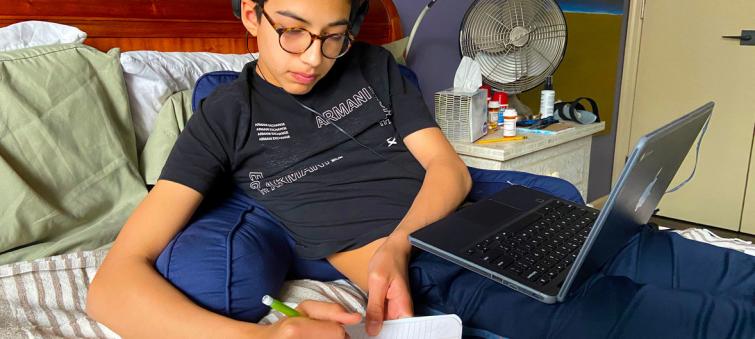
Photo caption and credit: UNICEF/Lisa Adelson Fourteen-year-old boy attends school online from home while his parents telework during the Coronavirus outbreak in New York.
Support Our Journalism
We cannot do without you.. your contribution supports unbiased journalism
IBNS is not driven by any ism- not wokeism, not racism, not skewed secularism, not hyper right-wing or left liberal ideals, nor by any hardline religious beliefs or hyper nationalism. We want to serve you good old objective news, as they are. We do not judge or preach. We let people decide for themselves. We only try to present factual and well-sourced news.
Support objective journalism for a small contribution.