 India AI Summit
India can meet short-term AI power demand but needs sustained solutions, German Digital Minister says
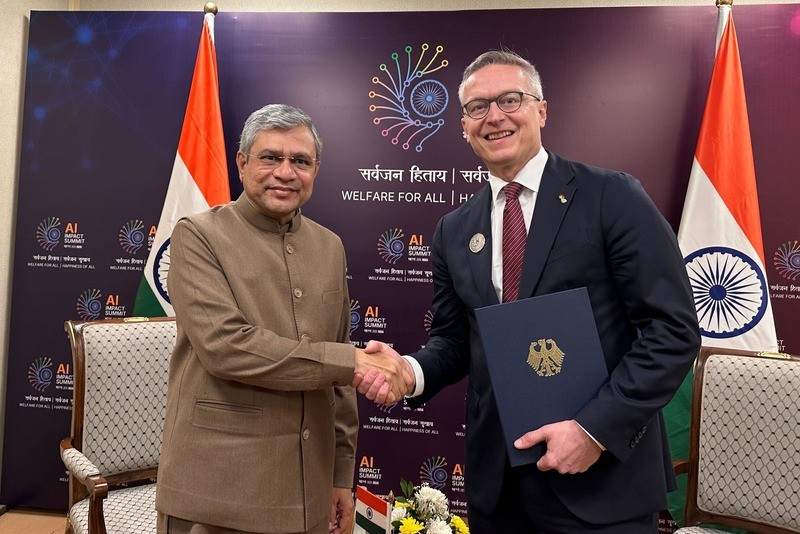
Germany’s Federal Digital Minister, Karsten Wildberger, said the country can manage the near-term surge in electricity demand fuelled by artificial intelligence but will need more durable, long-term solutions to sustain future growth.
Speaking to dpa at the end of the AI Impact Summit in New Delhi, Wildberger said discussions were already underway at the European level.
He pointed to talks he had held with Norway in the Indian capital, noting the country's geographical advantage in renewable energy, particularly hydropower.
Experts warn that the rapid expansion of large data centres as part of the AI boom will significantly increase electricity demand.
At the same time, the European Union is aiming to achieve climate neutrality by 2050, ruling out the long-term use of coal and gas for power generation. Germany has also completed its nuclear power phase-out.
Wildberger expressed optimism about nuclear fusion as a future climate-neutral energy source.
Unlike conventional nuclear fission reactors, fusion does not produce carbon emissions during operation and generates significantly less long-lived radioactive waste. However, scientists have yet to overcome major technical hurdles to make it commercially viable.
So far, the technology remains at the experimental stage.
"In the long term—in 10 years' time—this could be an important building block," Wildberger said. "In the short and medium term, we need other solutions, of course. That includes renewables."
The German government has set a goal of building the world's first fusion power plant in Germany.
Support Our Journalism
We cannot do without you.. your contribution supports unbiased journalism
IBNS is not driven by any ism- not wokeism, not racism, not skewed secularism, not hyper right-wing or left liberal ideals, nor by any hardline religious beliefs or hyper nationalism. We want to serve you good old objective news, as they are. We do not judge or preach. We let people decide for themselves. We only try to present factual and well-sourced news.
Support objective journalism for a small contribution.