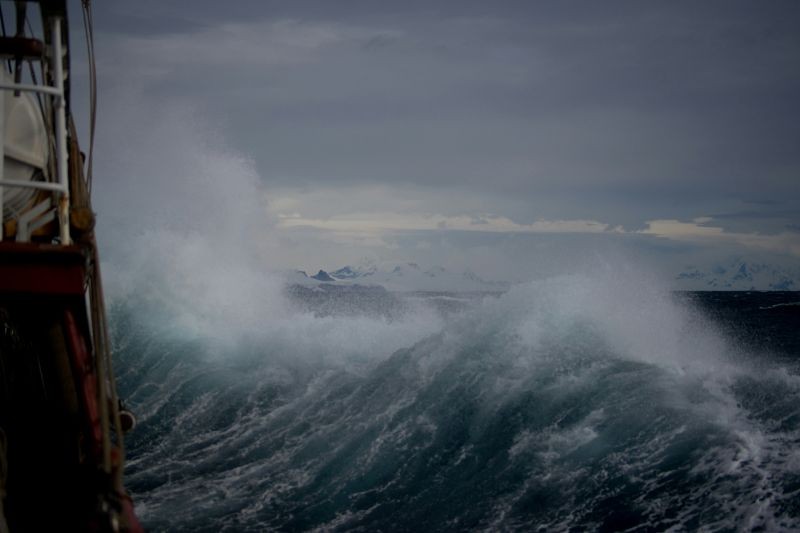
 Ocean Storm
Scientists warn climate change could bring bigger storms and waves to UK and Ireland
A new report led by the UK's National Oceanography Centre (NOC) highlights that the UK and Ireland could face more very severe winter storms in the future.
The findings come from the latest Marine Climate Change Impacts Partnership (MCCIP) Storms and Waves Rolling Evidence Update, which looks at how storm and wave patterns are already shifting — and what might happen next.
The report found that, since the 1990s, average wave heights have decreased, while winter storms have shifted further north and become more frequent, read the UK's National Oceanography Centre website.
A future with more extreme waves
Looking ahead, it says that average wave heights across the North Atlantic could decline slightly by 2100 — but extreme waves could become larger and more frequent. This “background stilling” will lead to calmer summers and stronger storm waves.
High-impact and low-likelihood events, such as the collapse of the Atlantic Meridional Overturning Circulation (AMOC), could also strengthen these storm tracks and winter westerly winds over the North Atlantic.
The newest climate models, which consistently predict storm tracks, also show that even a gradual weakening of the AMOC could lead to stronger storms and larger storm surges.
However, the authors note that there is still considerable uncertainty regarding future changes to North Atlantic storms, much of which are driven by natural variability rather than long-term climate change.
Challenges to UK coastal communities
"Storms and waves already cause major challenges for coastal communities and industries such as shipping and offshore energy," says Dr Lucy Bricheno, a coastal oceanographer at NOC and lead author of the report.
“Our research shows that extreme events could become even more damaging in future. Combined with the ongoing threat from the gradual rise of mean sea levels, extreme storms and waves will have an even bigger impact — affecting our coasts, homes, transport links and businesses that rely on the sea.
"Our work in understanding these changes is key to protecting our coastlines and the people and industries that depend on them.”
To improve future predictions, scientists are developing better ways to model storms and waves. They are combining real-world observations, satellite data, and computer models to build a clearer picture of what is happening in the North Atlantic.
These improvements will help coastal communities and industries plan ahead for a changing climate.
Support Our Journalism
We cannot do without you.. your contribution supports unbiased journalism
IBNS is not driven by any ism- not wokeism, not racism, not skewed secularism, not hyper right-wing or left liberal ideals, nor by any hardline religious beliefs or hyper nationalism. We want to serve you good old objective news, as they are. We do not judge or preach. We let people decide for themselves. We only try to present factual and well-sourced news.
Support objective journalism for a small contribution.