


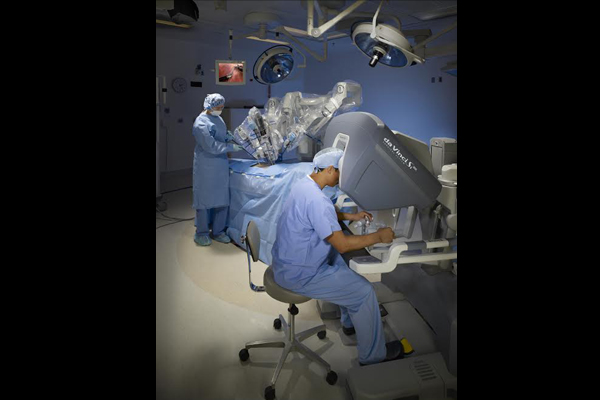
Robotic surgery can help cut post surgical trauma: Surgeons
By making ‘Depression’ the theme of the World Health Day on April 7, WHO hopes to get people talking about it.
What is little known is that a major cause of depression is post surgical trauma. Often, fear of complications, the time taken for recovery after a complex surgery, the lingering pain and the dos and don’ts after an operation sends the patient into acute depression.
However, newer minimally invasive methods of surgery such as robotic surgery that cut recovery time and reduce risks are helping to tackle this.
Says Dr Mahendra Bhandari, Director, Robotic Surgery Research and Education, Senior Staff at Vattikuti Urology Institute, Henry Ford Health System, “It’s a known fact that if the surgical technique is precise and recovery is uneventful and quick, the chances of depression are drastically reduced. Since robotic surgery ensures quicker recovery and drastically reduces pain it is definitely going to reduce the chances of post surgical depression in comparison to a major open surgery with long and protracted period of recovery.”
Agrees senior oncology surgeon Dr Somashekar S P, Chairman Surgical Oncology, Manipal Hospitals,“Depression is significantly reduced in robotic surgery as patient has less pain, goes home soon and gets back to routine quickly.”
Multiple Causes
According to Dr Bhandari post surgical depression could be due to one or more factors. Fear of disfigurement, disability, post surgery compromised life style, anesthesia or medicines used in surgery or the unbearable pain after surgery could all lead to depression.
“Surgery in an already depressed patient could worsen if it is not properly diagnosed and treated,” he warns.
Good pre and post operative counseling about the surgery is essential, says Dr Somashekar. Before going into surgery, the patient should be educated about the surgical procedure.
Robotic surgery scores over conventional surgery, as it minimizes blood loss, drastically reduces the post-operative recovery time, and brings precision in executing the procedure, thus saving healthy tissue from damage. The quick healing and lower pain-levels translate to shorter hospital stays and faster return to a happier home environment.
Symptoms of depression vary a great deal from patient to patient. Typically, depressed persons are sad, aloof and cut down communication, as well as suffer from sleeplessness.
Contrary to perception, depression can easily be prevented as well as treated. Apart from antidepressants, improving family environment, counseling and psychotherapy all help. But warns Dr Bhandari, who also serves as CEO, Robotic Surgery Programs, Vattikuti Foundation, Michigan, “The rate of recurrence of depression is extremely high. Patients need to be under constant surveillance even after they recover of the recent episode and are in normal health.”
Rues Dr Somasekhar, “There is not enough awareness about post surgical depression. This needs to be addressed at priority basis. Because surgery can only cure the patient of disease. It cannot make the patient healthy.”
Support Our Journalism
We cannot do without you.. your contribution supports unbiased journalism
IBNS is not driven by any ism- not wokeism, not racism, not skewed secularism, not hyper right-wing or left liberal ideals, nor by any hardline religious beliefs or hyper nationalism. We want to serve you good old objective news, as they are. We do not judge or preach. We let people decide for themselves. We only try to present factual and well-sourced news.
Support objective journalism for a small contribution.


