


Poor diets threaten health more than malaria, tuberculosis, measles – new UN report
New York, Nov 8 (IBNS): With one-in-five deaths associated with poor-quality diets, the United Nations Food and Agriculture Organization (FAO) issued a co-authored report on Wednesday, urging policymakers to reduce food loss and waste, to improve access to nutritious and healthy food.
The report, entitled “Preventing nutrient loss and waste across the food system: Policy actions for high-quality diets”, concludes that regularly eating poor-quality food has become a greater public health threat than malaria, tuberculosis or measles.
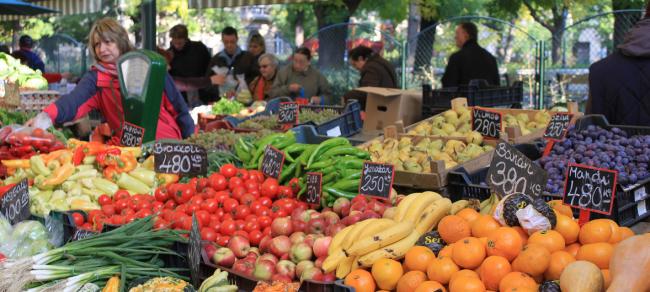
Meanwhile, approximately one-third of food produced for human consumption never reaches the consumer's plate or bowl. Nutrient-rich foods, such as fruits, vegetables, seafood and meats are highly perishable, rendering them susceptible to losses throughout increasingly complex food production systems.
According the report, each year more than half of all globally-produced fruits and vegetables are lost or wasted. Moreover, around 25 per cent of all meat produced, equivalent to 75 million cows, goes uneaten.
"To tackle all forms of malnutrition and promote healthy diets, we need to put in place food systems that increase the availability, affordability and consumption of fresh, nutrient-rich food for everyone,” said José Graziano da Silva, FAO Director-General.
Reducing food loss and waste, particularly high-nutrient foods, not only has nutritional benefits, but also contributes to the Sustainable Development Goals (SDGs), and should be a new priority for improving nutrition.
Taking action“Taking specific actions to reduce the losses and waste of fresh and nutritious food is a fundamental part of this effort," asserted da Silva, who is also a member of the Global Panel on Agriculture and Food Systems for Nutrition, joint report author.
To remedy this the report proposes a series of policy actions across the entire food system, including educating all concerned; focusing on perishable foods; improving public and private infrastructure; and closing data gaps on food losses and waste.
FAO data indicates that in low-income countries, food is mostly lost during harvesting, storage, processing and transportation; while in high-income nations the problem lies in retail and consumer level waste. Together, they directly impact the number of calories and nutrients actually available for consumption.
Given the direct impact on wellbeing, learning capacity and productivity, the loss and waste of micronutrients is of particular concern.
Globally, agriculture produces 22 per cent more vitamin A than we require. However, after loss and waste, the amount available for human consumption is 11 per cent less than required. Reducing the loss and waste of nutritious foods could therefore yield substantial health benefits.
With the value of global food lost or wasted annually, estimated to be around $1 trillion, cutting down on waste would also yield major economic benefits. Additionally, eating more of the food already produced, would avoid wasting the water, land and energy that went into its production, said FAO.
FAO/G. Agostinucci
Support Our Journalism
We cannot do without you.. your contribution supports unbiased journalism
IBNS is not driven by any ism- not wokeism, not racism, not skewed secularism, not hyper right-wing or left liberal ideals, nor by any hardline religious beliefs or hyper nationalism. We want to serve you good old objective news, as they are. We do not judge or preach. We let people decide for themselves. We only try to present factual and well-sourced news.
Support objective journalism for a small contribution.


