 Solar Eclipse
NASA shares safety guidelines for viewing April 8 total Solar Eclipse
NASA on Sunday said a total solar eclipse will cross North America, passing over Mexico, the United States, and Canada on November 8.
When does a total eclipse happen?
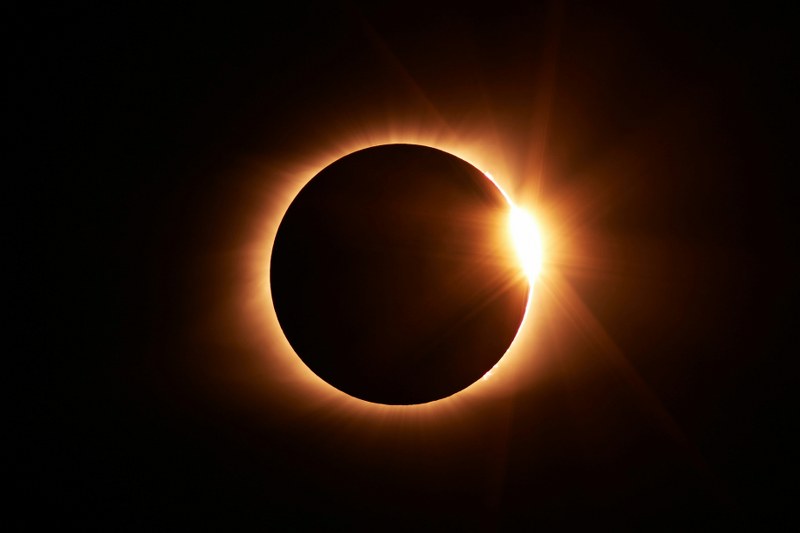
A total solar eclipse happens when the Moon passes between the Sun and Earth, completely blocking the face of the Sun.
The sky will darken as if it were dawn or dusk.
Safety is the number one priority
Except during the brief total phase of a total solar eclipse, when the Moon completely blocks the Sun’s bright face, it is not safe to look directly at the Sun without specialized eye protection for solar viewing, read the NASA website .
Viewing any part of the bright Sun through a camera lens, binoculars, or a telescope without a special-purpose solar filter secured over the front of the optics will instantly cause severe eye injury, the website said.
Suggesting people the way to observe the event, NASA said: "When watching the partial phases of the solar eclipse directly with your eyes, which happens before and after totality, you must look through safe solar viewing glasses (“eclipse glasses”) or a safe handheld solar viewer at all times. You can also use an indirect viewing method, such as a pinhole projector."
The total solar eclipse will begin over the South Pacific Ocean and will cross North America, passing over Mexico, United States, and Canada.
Support Our Journalism
We cannot do without you.. your contribution supports unbiased journalism
IBNS is not driven by any ism- not wokeism, not racism, not skewed secularism, not hyper right-wing or left liberal ideals, nor by any hardline religious beliefs or hyper nationalism. We want to serve you good old objective news, as they are. We do not judge or preach. We let people decide for themselves. We only try to present factual and well-sourced news.
Support objective journalism for a small contribution.