 Nobel Prize
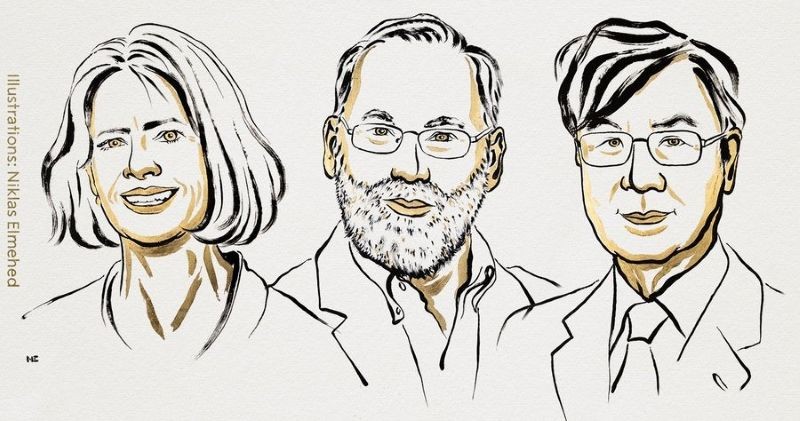
Mary Brunkow, Fred Ramsdell and Shimon Sakaguchi win Nobel Prize in Medicine. What did they discover?
Scientists Mary Brunkow, Fred Ramsdell and Shimon Sakaguchi were awarded the Nobel Prize in Physiology or Medicine for 'their discoveries concerning peripheral immune tolerance', the award-giving body said on Monday.
The awarded scientists identified the immune system’s security guards, regulatory T cells, which prevent immune cells from attacking our own body.
“Their discoveries have been decisive for our understanding of how the immune system functions and why we do not all develop serious autoimmune diseases,” says Olle Kämpe, chair of the Nobel Committee.
BREAKING NEWS
— The Nobel Prize (@NobelPrize) October 6, 2025
The 2025 #NobelPrize in Physiology or Medicine has been awarded to Mary E. Brunkow, Fred Ramsdell and Shimon Sakaguchi “for their discoveries concerning peripheral immune tolerance.” pic.twitter.com/nhjxJSoZEr
In a statement issued by the award-giving body, it said Shimon Sakaguchi was swimming against the tide in 1995, when he made the first key discovery.
At the time, many researchers were convinced that immune tolerance only developed due to potentially harmful immune cells being eliminated in the thymus, through a process called central tolerance.
Sakaguchi showed that the immune system is more complex and discovered a previously unknown class of immune cells, which protect the body from autoimmune diseases.
Mary Brunkow and Fred Ramsdell made the other key discovery in 2001, when they presented the explanation for why a specific mouse strain was particularly vulnerable to autoimmune diseases.
They had discovered that the mice have a mutation in a gene that they named Foxp3.
They also showed that mutations in the human equivalent of this gene cause a serious autoimmune disease, IPEX.
Two years after this, Shimon Sakaguchi was able to link these discoveries.
He proved that the Foxp3 gene governs the development of the cells he identified in 1995.
These cells, now known as regulatory T cells, monitor other immune cells and ensure that our immune system tolerates our own tissues.
"The laureates’ discoveries launched the field of peripheral tolerance, spurring the development of medical treatments for cancer and autoimmune diseases," read the statement.
The Nobel award-giving body said the dicovery may also lead to more successful transplantations.
Several of these treatments are now undergoing clinical trials.
Support Our Journalism
We cannot do without you.. your contribution supports unbiased journalism
IBNS is not driven by any ism- not wokeism, not racism, not skewed secularism, not hyper right-wing or left liberal ideals, nor by any hardline religious beliefs or hyper nationalism. We want to serve you good old objective news, as they are. We do not judge or preach. We let people decide for themselves. We only try to present factual and well-sourced news.
Support objective journalism for a small contribution.