 COVID19
Countries must ‘get their hands dirty’ to stem COVID and prevent future pandemics
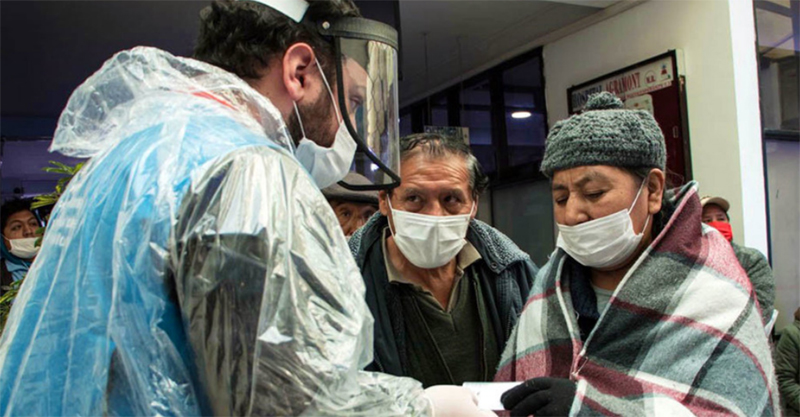
New York: The COVID-19 pandemic has upended a world embroiled in chaos, unleashing catastrophic health, social and economic consequences along with irreparable harm to humanity, according to UN-backed report published on Monday.
A World in Disorder, issued by the Global Preparedness Monitoring Board (GPMB), an independent monitoring and accountability body which prepares for global health crises, (GPMB), notes that the coronavirus has killed close to a million people, impacting health systems, food supplies and economies.
“We can no longer wring our hands and say something must be done”, said Tedros Adhanom, Director-General of the World Health Organization (WHO).
“It’s time for countries to get their hands dirty and build the public health systems to ensure a pandemic of this magnitude and severity never happens again”, he added.
‘A collective failure’
According to A World in Disorder, it would take 500 years to spend as much on preparedness to equal what COVID-19 is costing the world, which GPMB says will be in the trillions.Last year, the Board warned that the world was unprepared for a deadly pandemic and called for urgent action to break the cycle of panic and neglect that has characterized past responses to global health crises.
The new report provides a harsh assessment of the global COVID-19 response, calling it “a collective failure to take pandemic prevention, preparedness, and response seriously and prioritize it accordingly”.
According to GPMB “the world cannot afford this”.
Accountability is crucial
In many countries, leaders have struggled to take early decisive action based on science, evidence and best practices, leading to a profound and deepening deficit in trust that is hampering response efforts, GPMB highlighted.
“Transparency and accountability are essential in responding to the COVID-19 pandemic”, said GPMB co-Chair Elhadj As Sy. “Trust is the foundation of Government-community relationships for better health but that trust dissipates when governments and leaders do not deliver on their commitments.”
Responsible leadership and good citizenship have been key determinants of COVID-19’s impact, the report notes, underscoring that “systems are only as effective as the people who use them”.
Strengthen WHO
The report finds that although COVID-19 has demonstrated the deep interconnectedness of the world through economics, trade, information and travel, one of the greatest challenges of the pandemic has been faltering multilateral cooperation.
“Viruses don’t respect borders. The only way out of this devastating pandemic is along the path of collective action, which demands a strong and effective multilateral system”, said GPMB co-Chair Gro Harlem Brundtland, who also served as WHO Director-General from 1998 to 2003.
“The UN system, which includes the WHO, was created after World War Two and has helped make the world a better place for billions of people”, she continued, adding, “it needs to be defended, strengthened, and revitalized, not attacked and undermined”.
Fragilities abound
The pandemic has not only shone a spotlight on the fragility of the world’s health systems, but on the global economy as well – underscoring the urgency of investing in preparedness to avoid similar tragedies in the future.
To bring order out of chaos, the report highlights the actions needed to stem the pandemic and avoid the next catastrophe, which calls for responsible leadership, engaged citizenship, strong and agile health security systems, sustained investment, and robust global governance for preparedness.
“This will not be the last pandemic, nor the last global health emergency”, said the WHO chief, “but with the right political and financial investments now, we can prevent and mitigate future pandemics and protect our future and the future of generations to come”.
Support Our Journalism
We cannot do without you.. your contribution supports unbiased journalism
IBNS is not driven by any ism- not wokeism, not racism, not skewed secularism, not hyper right-wing or left liberal ideals, nor by any hardline religious beliefs or hyper nationalism. We want to serve you good old objective news, as they are. We do not judge or preach. We let people decide for themselves. We only try to present factual and well-sourced news.
Support objective journalism for a small contribution.