Canada: Climate change causes bird's plumage to evolve, study suggests
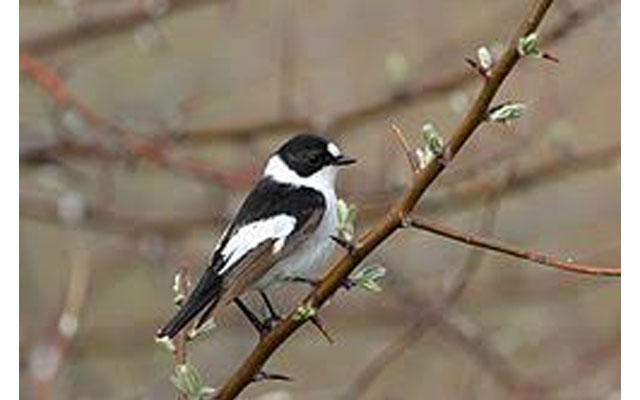
Lars Gustafsson, of the Department of Animal Ecology, Evolutionary Biology Centre at Uppsala University in Sweden, had been studying the species since 1980, collecting various data about its plumage or white patch, on the male's head that offer an advantage in breeding in attracting mates.
The study by Gustafsson and Simon Evans found that males with a large patch were favoured by mates after a cold breeding season, but not after a warm one, and researchers attributed this fact to rising spring temperatures at the breeding site.
Gustafsson had noticed over the years that the patch was progressively shrinking and saw a correlation with temperatures at the breeding sites. And there was a definite pattern to the shrinking head patch.
"It seems to have become a trend," he told CBC News.
The decline in size of the patch was more than 10 per cent, something that was conspicuous.
Birds with larger patches didn't fare as well in warmer years, as they were less likely to survive the winter.
Although the study suggested that the change is in response to climate change, the authors acknowledged that they don't have an explanation for the shrinking head patch.
"We view this study as an opening rather than a conclusion," Gustafsson said, CBCNews reports said .
In an article in the same journal, Cody Dey, who is with the Great Lakes Institute of Environmental Research, University of Windsor, and James Dale commented on the study that males are evolving to be less ornamented in response to rising temperatures.
Following warmer springs, small-patched males performed relatively better than during years following colder springs.
The flycatchers had already shifted their breeding by 10 days compared with the 1980s, when Gustafsson first began collecting data. This, he says, has been a result of insects, their food sources which emerged earlier as warmer temperatures occur sooner in the year.
(Reported by Asha Bajaj, Image of Ficedula albicollis: Wikipedia)
Support Our Journalism
We cannot do without you.. your contribution supports unbiased journalism
IBNS is not driven by any ism- not wokeism, not racism, not skewed secularism, not hyper right-wing or left liberal ideals, nor by any hardline religious beliefs or hyper nationalism. We want to serve you good old objective news, as they are. We do not judge or preach. We let people decide for themselves. We only try to present factual and well-sourced news.
Support objective journalism for a small contribution.