


 AMR
AMR
Antimicrobial resistance is a major public health concern: JP Nadda
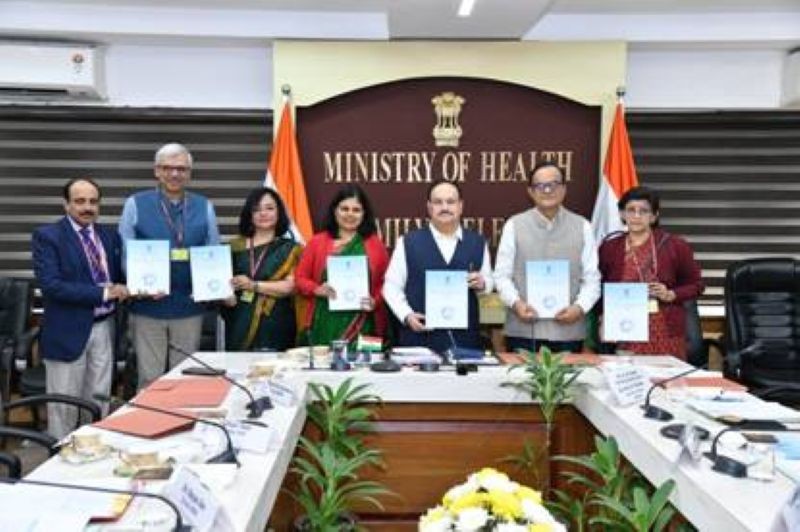
Union Minister of Health and Family Welfare, Jagat Prakash Nadda, launched the second version of the National Action Plan on Antimicrobial Resistance (2025–29) in New Delhi on Tuesday, emphasising that antimicrobial resistance (AMR) is a major public health concern that can only be addressed through collective action.
Nadda noted that the journey began in 2010 with initial discussions, followed by the launch of the first NAP-AMR in 2017.
Highlighting the gravity of the challenge, he stated that AMR poses significant risks, particularly in surgical procedures, cancer treatment, and other critical healthcare interventions.
@DBTIndia is an active partner in MoHFW’s NAP 2.0, launched on the occasion of AMR Awareness Week—strengthening research and innovation to fight AMR. #AMR #NAP-AMR2.0@DrJitendraSingh @rajesh_gokhale pic.twitter.com/3KtA7kyP1S
— Department of Biotechnology (@DBTIndia) November 18, 2025
He added that the overuse and misuse of antibiotics has unfortunately become common practice, underscoring the urgency of corrective measures.
Several important initiatives have been undertaken by various line ministries in this regard.
Nadda also pointed out that NAP-AMR 2.0 addresses the gaps identified in the first NAP-AMR by increasing the ownership of AMR-related efforts, strengthening inter-sectoral coordination and ensuring stronger engagement with the private sector.
Asserting on the key strategies of AMR containment which are to be implemented under NAP AMR 2.0, he stated the importance of increasing awareness, education and training. He also highlighted the requirement of enhancing laboratory capacity and infection control in healthcare facilities. Shri Nadda stressed on the importance of regular stakeholder meetings to resolve challenges promptly.
Dr A K Sood stated that the NAP-AMR 2.0 is timely initiative for generating a more coherent action plan which is aptly being released on the first day of the WHO’s World AMR Awareness Week (18-24 Nov).
Noting that India is one of the pioneers in driving this initiative globally, he stated that AMR is a like a pandemic affecting many countries especially the developing countries in Asia and Africa.
Dr Sood highlighted some of the steps taken by India in countering the menace of AMR. He pointed out that Kerala and Gujarat are the first states to ban over-the-counter sales of antibiotics. Some antimicrobials and pesticides have also been banned for use in crops.
“The India AMR Innovation Hub was established involving both national and international stakeholders to build a novel technology platform. It has helped in mobilizing resources, bringing out innovation and enhancing collaboration between multiple stakeholders,” he stated.
Support Our Journalism
We cannot do without you.. your contribution supports unbiased journalism
IBNS is not driven by any ism- not wokeism, not racism, not skewed secularism, not hyper right-wing or left liberal ideals, nor by any hardline religious beliefs or hyper nationalism. We want to serve you good old objective news, as they are. We do not judge or preach. We let people decide for themselves. We only try to present factual and well-sourced news.
Support objective journalism for a small contribution.


