 A23a
A23a
A23a: World's largest and oldest iceberg breaks free, drifting in Southern Ocean
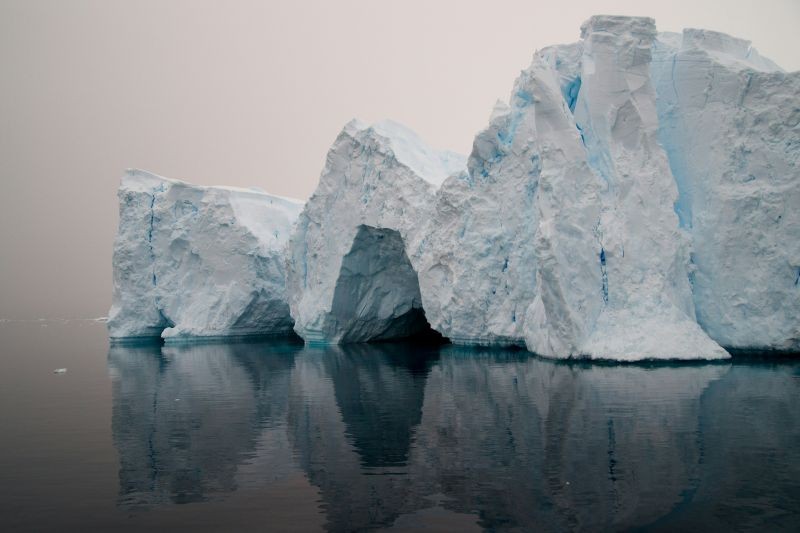
The world’s largest and oldest iceberg A23a is on the move.
After decades of being grounded on the seafloor and more recently spinning on the spot, the mega-iceberg has broken free from its position north of the South Orkney Islands and is now drifting in the Southern Ocean.
The colossus A23a, which is double the size of Greater London and weighs nearly a trillion tonnes, calved from Antarctica’s Filchner Ice Shelf in 1986, and remained grounded on the seabed in the Weddell Sea for over 30 years before beginning its slow journey north in 2020.
The iceberg’s journey has been marked by intriguing scientific events.
For months, the iceberg was trapped in a Taylor Column, an oceanographic phenomenon where rotating water above a seamount traps objects in place.
This dynamic kept A23a spinning in one spot delaying its expected rapid drift north.
It is anticipated A23a will continue its journey into the Southern Ocean following the Antarctic Circumpolar Current, which is likely to drive it towards the sub-Antarctic island of South Georgia.
In that region it will encounter warmer water and is expected to break up into smaller icebergs and eventually melt.
Dr Andrew Meijers, an oceanographer at British Antarctic Survey, who co-leads the OCEAN:ICE project that aims to understand how the icesheet affects the ocean says: “It’s exciting to see A23a on the move again after periods of being stuck. We are interested to see if it will take the same route the other large icebergs that have calved off Antarctica have taken. And more importantly what impact this will have on the local ecosystem.”
Exactly one year ago researchers aboard the British Antarctic Survey’s state-of-the-art research vessel, the RRS Sir David Attenborough, observed and studied the iceberg as they were on a science mission in the Weddell Sea for the BIOPOLE project.
Scientists took the first photos of the moving iceberg while looking at how Antarctic ecosystems and sea ice influence global ocean cycles of carbon and nutrients, collected data from alongside the vast iceberg.
Laura Taylor, a biogeochemist on the BIOPOLE cruise, highlighted the significance of their close encounter with A23a, said: “We know that these giant icebergs can provide nutrients to the waters they pass through, creating thriving ecosystems in otherwise less productive areas."
"What we don’t know is what difference particular icebergs, their scale, and their origins can make to that process," Taylor said.
"We took samples of ocean surface waters behind, immediately adjacent to, and ahead of the iceberg’s route. They should help us determine what life could form around A23a and how it impacts carbon in the ocean and its balance with the atmosphere," Taylor said.
Support Our Journalism
We cannot do without you.. your contribution supports unbiased journalism
IBNS is not driven by any ism- not wokeism, not racism, not skewed secularism, not hyper right-wing or left liberal ideals, nor by any hardline religious beliefs or hyper nationalism. We want to serve you good old objective news, as they are. We do not judge or preach. We let people decide for themselves. We only try to present factual and well-sourced news.
Support objective journalism for a small contribution.