Murata considers shifting iPhone component prodn to India amid supply chain shifts: Report
Japanese electronics component maker Murata Manufacturing Co. is evaluating the possibility of relocating part of its production to India as global supply chains increasingly pivot toward the country, Bloomberg reported.
Murata, a Kyoto-based manufacturer of Multilayer Ceramic Capacitors (MLCCs), is witnessing rising demand in India and is assessing investment scenarios to expand its presence there, according to its President, Norio Nakajima.
“We’ve been making our newest capacitors mostly in Japan, but customers are asking us to manufacture more overseas due partly to business continuity planning purposes,” Nakajima was quoted as saying by Bloomberg.
Murata’s capacitors are integral to a wide range of electronics, from Apple Inc. and Samsung Electronics Co. smartphones to Nvidia Corp. servers and Sony Group Corp. gaming consoles.
The company has also contributed to NASA’s Mars helicopter project. Currently, nearly 60% of its MLCC production is based in Japan, but Nakajima expects this share to decline to around 50% in the coming years.
As the leading global supplier of capacitors, Murata plays a key role in regulating power supply to electronic components.
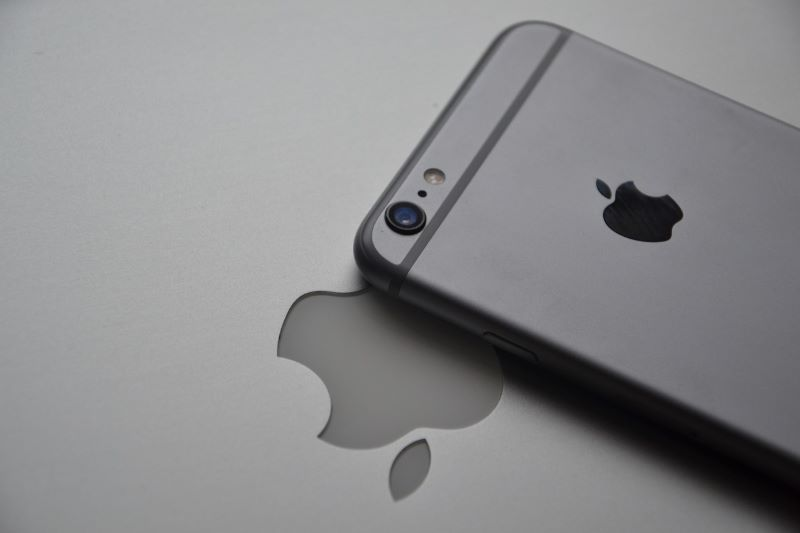
Apple has been diversifying its production beyond China, recently launching trial manufacturing of AirPods in India.
Meanwhile, several Chinese smartphone manufacturers are expected to expand their operations in the country, attracted by its large workforce and rising consumer spending.
These trends, along with support from the Indian government under Prime Minister Narendra Modi, have encouraged Murata to secure a plant in OneHub Chennai Industrial Park in Tamil Nadu.
The company intends to use this facility for packaging and shipping ceramic capacitors, with operations set to begin in the fiscal year starting April 2026.
Murata has committed ¥1 billion ($6.6 million) to a five-year lease for this site as a testbed to gauge long-term demand before investing in a larger production facility, Nakajima said, reported Bloomberg.
“It’s too early for us to build an integrated production facility in India, because the infrastructure for inputs such as power hasn’t reached the level we need, but we wanted to move early to build some capacity there as our customers shift production,” he explained.
“There’s growing consumer demand for electronics in the country, and we also should be ready to respond quickly when India introduces new incentives to encourage domestic manufacturing.”
Despite its expansion plans in India, Murata currently has no intentions of establishing manufacturing units in the US. Nakajima noted that since its capacitors are primarily used in products assembled in Asia before being shipped to the US, there is no immediate need for American-based production.
While former US President Donald Trump’s stance on reciprocal tariffs has led to internal discussions at Murata, the company’s primary concern is the indirect economic impact of such measures. Nakajima warned that rising costs across a broad spectrum of consumer goods could ultimately dampen demand for capacitors.
Murata anticipates global smartphone shipments to maintain a steady annual growth rate of 3% or lower, largely driven by mid-range and budget smartphones in emerging markets.
However, faster expansion is expected in the AI-driven server market. Strong demand in this segment has already contributed to a 15% increase in Murata’s stock price since its latest earnings report in early February.
As a bellwether for consumer electronics demand, Murata projects global smartphone production to reach 1.18 billion units in fiscal 2024, reflecting a 3% increase from the previous year.
Support Our Journalism
We cannot do without you.. your contribution supports unbiased journalism
IBNS is not driven by any ism- not wokeism, not racism, not skewed secularism, not hyper right-wing or left liberal ideals, nor by any hardline religious beliefs or hyper nationalism. We want to serve you good old objective news, as they are. We do not judge or preach. We let people decide for themselves. We only try to present factual and well-sourced news.
Support objective journalism for a small contribution.