 Bivoltine silk
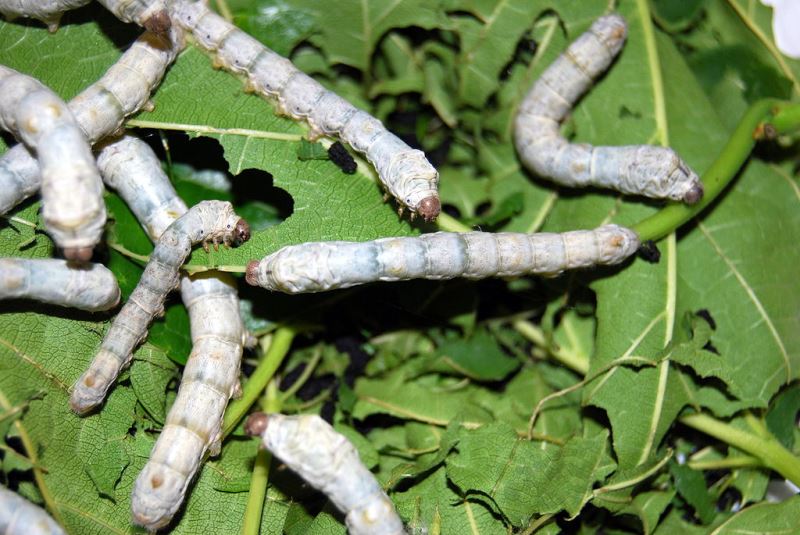
Jammu and Kashmir continues to produce best quality Bivoltine silk
Srinagar: Jammu and Kashmir is the only region in the world which produces best quality Bivoltine silk.
Due to a congenial climate, conducive to the production of world-famous Indian silk products, other products of international grade have also their origin in the valley, reports ANI.
According to India Brand Equity Foundation (IBEF), India is the second-largest producer of silk in the world. The country’s sericulture industry employs around 9.76 million people in rural and semi-urban areas, the Indian news agency reported.
Interestingly, the industry remains one of the main sources of contributing to the foreign exchange reserves in the country.
The total silk production in India during 2021-2022 was 34,903 MT, an increase of 3.4 per cent year-on-year over the previous year (33,770 MT), according to data from IBEF, reports ANI.
On a global level, silk accounts for about 0.2 per cent of total textile fibre production, according to the International Trade Centre (ITC) report 2000 as quoted by ANI.
Employment generation in sericulture is remarkable and accounts for annual income ranging from Rs 50,000 to Rs 100,000 followed by Rs 100,000 to 150,000 for 26.66 per cent and 20 per cent of the sericulture farmers respectively, reports said.
Support Our Journalism
We cannot do without you.. your contribution supports unbiased journalism
IBNS is not driven by any ism- not wokeism, not racism, not skewed secularism, not hyper right-wing or left liberal ideals, nor by any hardline religious beliefs or hyper nationalism. We want to serve you good old objective news, as they are. We do not judge or preach. We let people decide for themselves. We only try to present factual and well-sourced news.
Support objective journalism for a small contribution.