 India-US
India-US textile trade agreement: A landmark deal to boost exports and employment
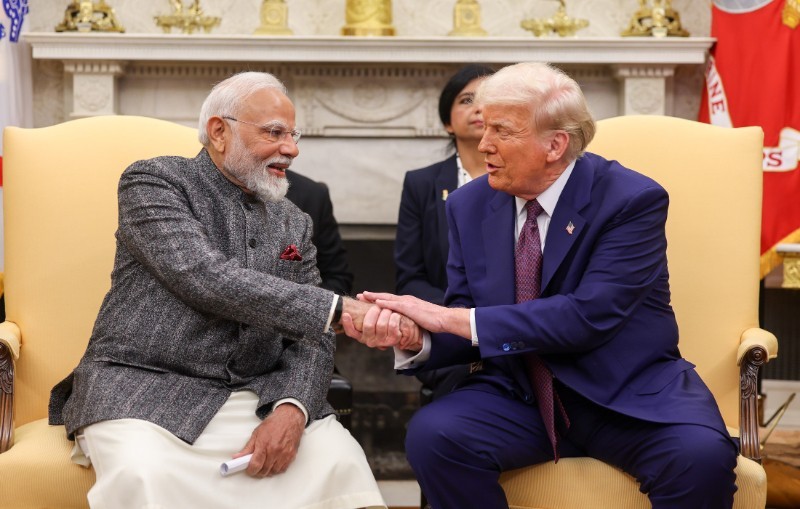
The Indian Ministry of Textiles has welcomed the landmark agreement between India and the United States (US) as a major catalyst enhancing the textile trade relations between the nations.
The textile industry expressed the hope that this is a major economic game changer for the sector.
For textiles exports, it opens up a $118 billion US global imports market of textiles, apparels and made ups.
With the US being India’s largest export destination of around $ 10.5 billion exports, comprising around 70% apparel and 15% made ups, this is a major opportunity.
It is expected to play a pivotal role in India achieving its intended target of $100 billion exports in 2030.
The deal is expected to provide the requisite momentum, with US to contribute to more than 1/5th of this target.
The 18% reciprocal tariffs on all the textiles products including apparel and madeups will not only remove the disadvantage that Indian exporters had, but would place them in a better position than most competitors like Bangladesh (20%), China (30%), Pakistan (19%) and Vietnam (20%) who have higher reciprocal tariffs.
This would alter the market dynamics as large buyers would surely relook at their sourcing in the light of this agreement.
The agreement would also enable the industry to be cost competitive and diversify their risks by sourcing intermediates for the textiles sector from the US.
This would facilitate manufacturing of value-added textiles in the country and diversify our production and exports. The deal would generate additional employment and encourage investments by US entities.
Support Our Journalism
We cannot do without you.. your contribution supports unbiased journalism
IBNS is not driven by any ism- not wokeism, not racism, not skewed secularism, not hyper right-wing or left liberal ideals, nor by any hardline religious beliefs or hyper nationalism. We want to serve you good old objective news, as they are. We do not judge or preach. We let people decide for themselves. We only try to present factual and well-sourced news.
Support objective journalism for a small contribution.