 AI
AI
India needs enterprise-level DPI to reduce regulatory cholesterol, unlock growth potential: NCAER VC
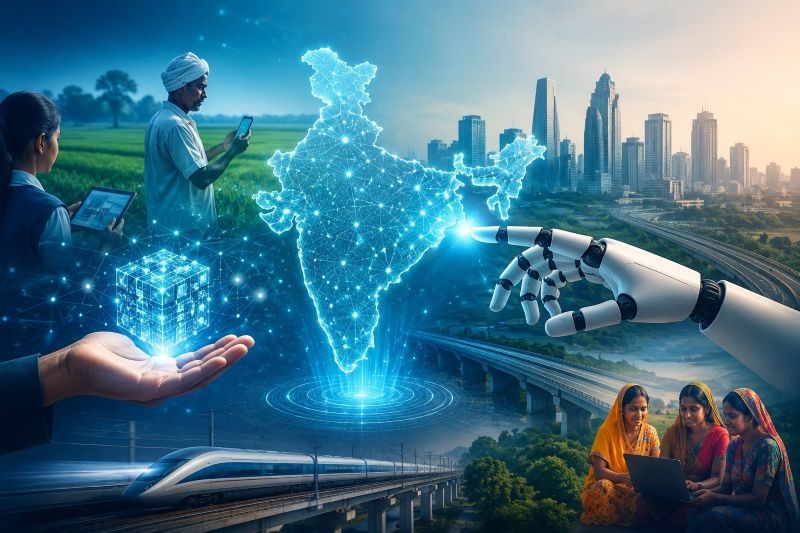
How can Digital Public Infrastructure (DPI) and Artificial Intelligence (AI) dovetail to unlock India’s growth potential and put it on a fast lane to achieve the milestone of ‘Viksit Bharat’ by 2047?
In a conversation with NCAER Director General Suresh Goyal during the premier think-tank’s inaugural podcast series, Parisila Perspectives, its Vice-Chairman Manish Sabharwal said DPI needs to combine with AI and integrated into policymaking for India’s transition from mass democracy to mass prosperity.
“We don't have city-level Digital Public Infrastructure, which would have made our urbanization a little better. We don't have DPI yet in education and skilling, which will reduce the friction in labour markets,” Sabharwal said, suggesting that India’s digital exhaust could be used to do research that helps solve problems at the individual level and national scale.
Making a strong case for enterprise DPI, Sabharwal said it could make all regulatory filings and compliances and licences paperless, benefiting small enterprises tremendously, and unlocking their employment potential and growth.
“The binding constraint on India's growth, investment and employment is regulatory cholesterol,” explained Sabharwal, who is also co-founder of TeamLease Services, India’s leading staffing and human capital firm.
Regarding the focus on DPI’s impact on financial services till now and how it can be used for enterprises and to change livelihoods and employability, he said the next generation of DPI should be focused on prosperity - now that access has been established- which would be a very important part of India's development journey.
“Our next tryst with destiny is adding mass prosperity to mass democracy,” he said, underscoring that the agenda for DPI is the agenda for India, which is access, equity and productivity.
He also said layering AI on top of DPI’s digital exhaust could take away much of the rent-seeking and corruption.
“Corruption is the transmission losses between how the law is written, interpreted and practised,” said Sabharwal who has been an independent Board member of RBI and CAG and also served on various policy committees on education and employment.
With an eye to providing evidence-based research insights into AI and DPI, NCAER will launch a new research centre devoted to this area of study in July 2026.
On June 5-6, the think tank will host a workshop in New Delhi that will bring together high-level researchers, policy-makers and product builders from around the world to exchange ideas and create a framework for the new research vertical.
Support Our Journalism
We cannot do without you.. your contribution supports unbiased journalism
IBNS is not driven by any ism- not wokeism, not racism, not skewed secularism, not hyper right-wing or left liberal ideals, nor by any hardline religious beliefs or hyper nationalism. We want to serve you good old objective news, as they are. We do not judge or preach. We let people decide for themselves. We only try to present factual and well-sourced news.
Support objective journalism for a small contribution.