

 UNCTAD
Global trade hits record $35 trillion despite wars and global conflicts
World trade reached a record $35 trillion in 2025 – but developing countries were held back from greater participation in the global economy because of new technological and policy barriers, the UN trade and development agency UNCTAD said on Friday.
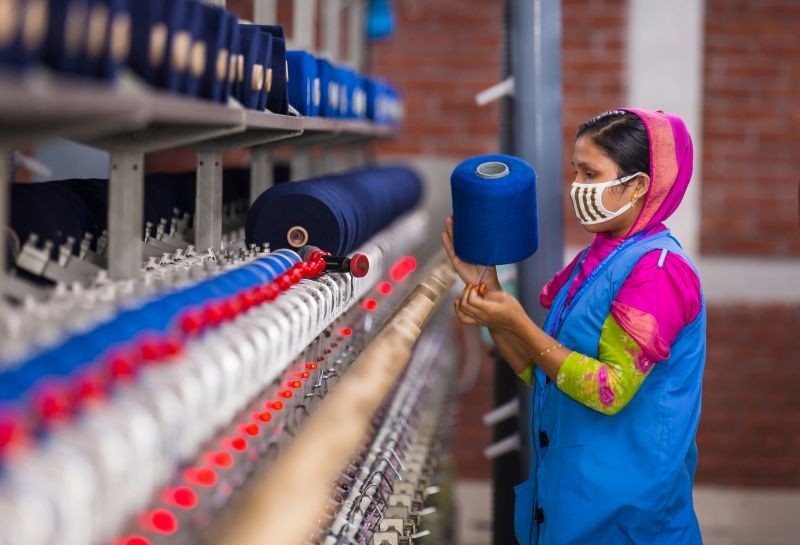
“Only a fraction of investment by companies is now driven by traditional concerns such as low labour costs,” said senior UNCTAD official, Anastasia Nesvetailova.
“Instead, value is moving into strategic sectors, semiconductors, artificial intelligence, clean energy, advanced computing, where the barriers to entry are high and rising.”
Access issues
The agency identified increasing export controls, investment screening and supply-chain pre-conditions as the reasons why strategic sectors were harder for developing countries to access.
Turning to this year, UNCTAD said that higher trade values continue to be driven by price hikes linked to the global energy shock caused by the US-Iran war.
The global trade map is also shifting, with trade between China and the United States falling by more than 20 per cent since 2024.
Meanwhile, East Asian countries have expanded their trade links with both China and North America.
Asia: Growth engine
“Even as the (global) economy slows, Asia will contribute 60 per cent of global growth this year,” Nesvetailova explained. “The fastest expanding economies include China, India, Indonesia, Kyrgyzstan, Mongolia, Tajikistan, Uzbekistan, and Vietnam.”
Global South slips behind
Apart from a handful of Asian economies, most of the Global South is falling further behind, UNCTAD maintained. And as their growth slows, financial risks are mounting and development finance is under strain, the agency said.
In support of trade in developing countries, UNCTAD called for support for domestic industries over the long term, training, research and foreign investment tied to local suppliers.
Support Our Journalism
We cannot do without you.. your contribution supports unbiased journalism
IBNS is not driven by any ism- not wokeism, not racism, not skewed secularism, not hyper right-wing or left liberal ideals, nor by any hardline religious beliefs or hyper nationalism. We want to serve you good old objective news, as they are. We do not judge or preach. We let people decide for themselves. We only try to present factual and well-sourced news.
Support objective journalism for a small contribution.