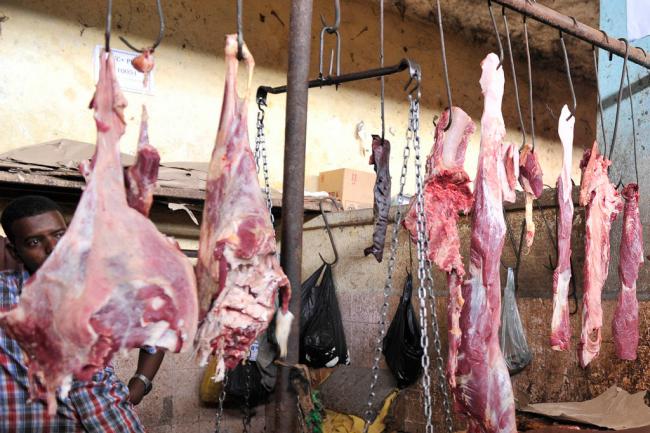
UN report links processed meats to cancer in humans
“In view of the large number of people who consume processed meat, the global impact on cancer incidence is of public health importance,” said Dr. Kurt Straif, Head of the International Agency for Research on Cancer (IARC) programme responsible for the findings.
After reviewing the accumulated scientific literature, a working group of 22 experts from 10 countries convened by the IARC, processed meat was classified as carcinogenic to humans based on sufficient evidence in humans that the consumption of processed meat causes colorectal cancer.
Processed meat refers to meat that has been transformed through salting, curing, fermentation, smoking, or other processes to enhance flavour or improve preservation.
Most processed meats contain pork or beef, but processed meats may also contain other red meats, poultry, offal, or meat by-products such as blood.
The agency said examples of processed meat include hot dogs, or frankfurters, ham, sausages, corned beef, and biltong or beef jerky, as well as canned meat and meat-based preparations and sauces.
The experts “concluded that each 50 gram portion of processed meat eaten daily increases the risk of colorectal cancer by 18 per cent,” according to a press release issued on Monday.
The agency also said that the consumption of red meat asprobably carcinogenic to humans based onlimited evidence that the consumption of red meat causes cancer in humans. Red meat refers to all types of mammalian muscle meat, such as beef, veal, pork, lamb, mutton, horse, and goat.
The association between red meat and cancer was observed mainly for colorectal cancer, but associations were also seen for pancreatic cancer and prostate cancer, it said.
”These findings further support current public health recommendations to limit intake of meat,” said IARC director Dr. Christopher Wild.
“At the same time, red meat has nutritional value,” Dr. Wild said. “Therefore, these results are important in enabling governments and international regulatory agencies to conduct risk assessments, in order to balance the risks and benefits of eating red meat and processed meat and to provide the best possible dietary recommendations.”
The IARC Working Group considered more than 800 studies that investigated associations of more than a dozen types of cancer with the consumption of red meat or processed meat in many countries and populations with diverse diets.
The IARC’s mission is to coordinate and conduct research on the causes of human cancer, the mechanisms of carcinogenesis, and to develop scientific strategies for cancer control.
Photo: AMISOM/Omar Abdisalan
Support Our Journalism
We cannot do without you.. your contribution supports unbiased journalism
IBNS is not driven by any ism- not wokeism, not racism, not skewed secularism, not hyper right-wing or left liberal ideals, nor by any hardline religious beliefs or hyper nationalism. We want to serve you good old objective news, as they are. We do not judge or preach. We let people decide for themselves. We only try to present factual and well-sourced news.
Support objective journalism for a small contribution.