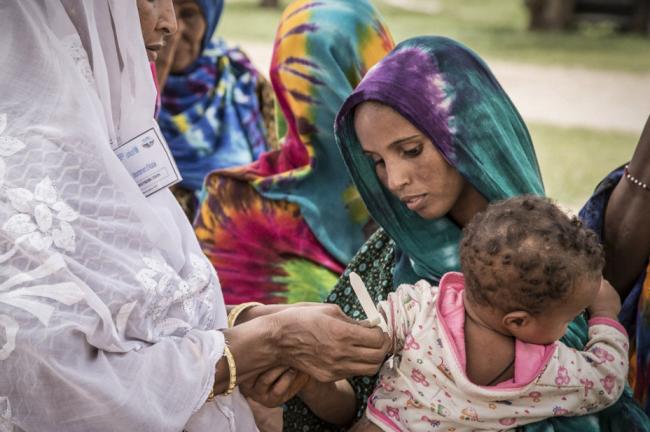
The new partnership, the Primary Health Care Performance Initiative (PHCPI) was launchedyesterday in New York on the margins of the three-day UN Sustainable Development Summit at an event co-hosted with the governments of Germany, Ghana, and Norway.
They have released a new framework – ‘Roadmap: Healthy Systems-Healthy Lives’ – which can strengthen health systems. This is a partnership that can support countries to strengthen monitoring, tracking and sharing of key performance indicators for primary health care, according to WHO.
Primary health care is the pillar of health systems and is central to preventing epidemics like Ebola; improving women’s and children’s health; controlling major infectious diseases, and managing the rising burden of non-communicable diseases.
“Strong primary health care systems are where people turn in their communities to stay healthy and get care when they fall sick. When primary health care works, it can meet the vast majority of people’s health needs," said WHO Director General Dr. Margaret Chan
“Yet Ebola revealed what can happen, starting with primary care, when health systems are broken and in need of repair,” she added.
Primary health care is a weak link in health systems in most areas, and many countries require better health data of their citizens, which will ensure a more effective planning and action.
More than 400 million people worldwide lack access to essential health services typically delivered through primary health care.
For his part, Jim Yong Kim, President of the World Bank Group, said that for the first time, the world has set a goal with specific targets for universal health coverage by 2030.
“To ensure that everyone has access to essential and affordable health services, countries must have strong primary health care systems to deliver them – that’s how we’ll reach the poorest and most vulnerable people with the care they need, in the most equitable way,” he said.
The PHCPI will bring together health policymakers, practitioners, advocates and development partners to process the improvement of primary health care system.
The Initiative monitors “vital signs,” or performance indicators, of primary health care. It already tracks 25 signs in 135 data-available countries.
The new partnership will expand the availability of existing data to more countries because there are still major limitations of using and learning from the existed data.
At the same time, the PHCPI can collaborate with country partners on an ongoing basis and provide a platform for countries to share lessons and co-develop tools for improving primary health care.
Photo: WFP/Chris Terry, supported by the EU
Support Our Journalism
We cannot do without you.. your contribution supports unbiased journalism
IBNS is not driven by any ism- not wokeism, not racism, not skewed secularism, not hyper right-wing or left liberal ideals, nor by any hardline religious beliefs or hyper nationalism. We want to serve you good old objective news, as they are. We do not judge or preach. We let people decide for themselves. We only try to present factual and well-sourced news.
Support objective journalism for a small contribution.