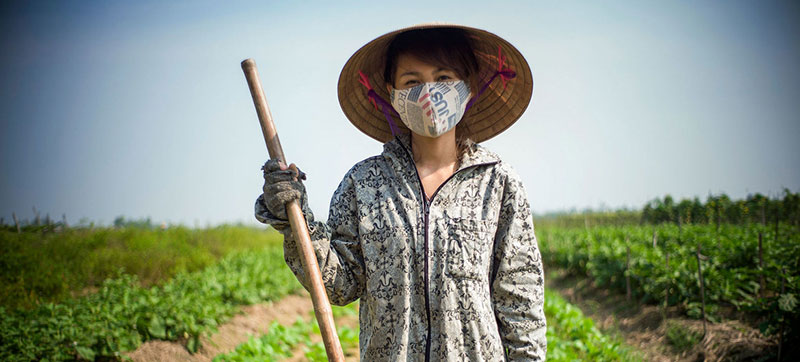
 Healthy Diet
Three billion people cannot afford a healthy diet, says UN agriculture agency
New York: Approximately three billion people, almost 40 per cent of the world’s population, cannot afford a healthy diet and another one billion people would join their ranks should further unpredictable events reduce incomes by one-third, the UN food agency said, launching a new report on Tuesday.
The Food and Agriculture Organization’s (FAO) 2021 State of Food and Agriculture (SOFA) report – Making agrifood systems more resilient to shocks and stresses – states that, without proper preparation, unpredictable shocks will continue to undermine these systems.
The report defines shocks as short-term events that have negative effects on a system, people’s well-being, assets, livelihoods, safety and ability to withstand future shocks.
More resilience
FAO stressed the need for countries to make their systems more resilient to sudden shocks, like the COVID-19 pandemic, which played a large part in the latest global hunger surge.
At the virtual launch event, FAO Director-General, QU Dongyu, said, “the pandemic highlighted both the resilience and the weakness of our agrifood systems”.
Agrifood systems - the web of activities involved in the production of food and non-food agricultural products and their storage, processing, transportation, distribution and consumption - produce 11 billion tonnes of food a year and employ billions of people, directly or indirectly.
The UN agency underscored the urgency of strengthening their capacity to endure shocks, including extreme weather events and surges in plant and animal diseases and pests.
While food production and supply chains have historically been vulnerable to climate extremes, armed conflicts or increases in global food prices, the frequency and severity of these shocks are on the rise.
Concrete action
Moreover, a disruption to critical transport links could push food prices up for some 845 million people.
The report includes country-level indicators in over one hundred Member States, by analyzing factors such as transport networks, trade flows and the availability of healthy and varied diets.
While low-income countries generally face much greater challenges, middle-income countries are also at risk.
In Brazil, for example, 60 per cent of the country’s export value comes from just one trading partner, narrowing its options should a shock hit that partner country.
Even high-income countries, such as Australia and Canada, are at risk because of the long distances involved in the distribution of food.
Recommendations
Based on the evidence in the report, FAO makes a series of recommendations.
The key is diversification – of actors, input sources, production, markets and supply chains – to create multiple pathways for absorbing shocks.
Supporting the development of small and medium agrifood enterprises and cooperatives would also help maintain diversity in domestic value chains.
Another key factor is connectivity. Well-connected networks overcome disruptions faster by shifting sources of supply and channels for transport, marketing, inputs and labour.
Finally, improving the resilience of vulnerable households is critical to ensure a world free from hunger. This can be done by improving access to assets, diversified income sources and social protection programmes.
Support Our Journalism
We cannot do without you.. your contribution supports unbiased journalism
IBNS is not driven by any ism- not wokeism, not racism, not skewed secularism, not hyper right-wing or left liberal ideals, nor by any hardline religious beliefs or hyper nationalism. We want to serve you good old objective news, as they are. We do not judge or preach. We let people decide for themselves. We only try to present factual and well-sourced news.
Support objective journalism for a small contribution.