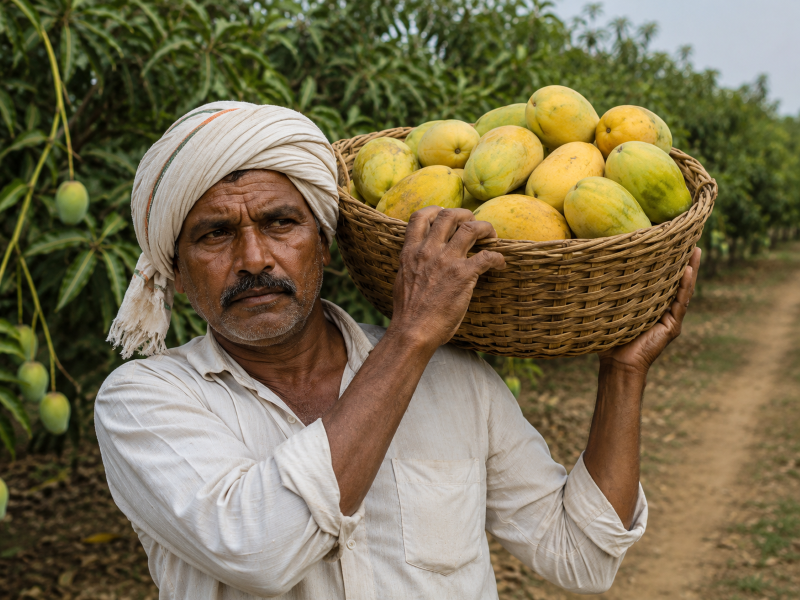
Japan suspends Indian mango imports after pest-control lapses found
Japan has suspended mango imports from India after quarantine officials detected lapses in pest-control procedures at Indian treatment facilities during inspections earlier this year, dealing a blow to exporters during the peak summer mango season.
The move impacts premium Indian mango varieties, including Alphonso, Kesar, Langra and Banganapalli, which are popular in the Japanese market for their quality and flavour.
First restriction in nearly 20 years
The suspension marks the first such restriction by Japan in almost two decades.
Japan had previously banned Indian mangoes over fruit fly concerns, but lifted the curbs in 2006 after India upgraded its treatment and quarantine systems to meet strict Japanese standards.
Japanese authorities have now once again raised concerns over whether Indian mango consignments are fully complying with the country’s plant health and pest-control requirements.
Japan follows a strict zero-tolerance policy toward invasive pests such as fruit flies, which are considered a serious threat to domestic agriculture.
What inspectors found
Before every export season, Japan sends quarantine experts to inspect India’s Vapour Heat Treatment (VHT) facilities, where mangoes are disinfected before shipment.
VHT is a non-chemical treatment process in which mangoes are exposed to carefully controlled hot and humid air conditions to eliminate pests and fruit fly larvae.
The process is mandatory under export agreements between India and Japan.
This year’s inspection took place in March at a VHT facility in Rehmanpur, Uttar Pradesh. According to reports, Japanese inspectors identified deficiencies related to fumigation and disinfection procedures during the visit.
However, neither Indian nor Japanese authorities have publicly disclosed the exact technical shortcomings found at the facility.
Following the inspection, the Yokohama Plant Protection Association announced that Indian mango shipments carrying inspection certificates issued after March 25, 2026, would no longer be accepted.
Major blow for exporters
Although Japan is not India’s largest mango export destination, exporters say the suspension is significant because Indian mangoes command premium prices in the Japanese market.
India produces nearly 28 million metric tonnes of mangoes annually, making it the world’s largest producer.
While most of the produce is consumed domestically, exports to high-value markets such as Japan generate substantial earnings for growers and traders.
Exporters now fear the suspension could hurt confidence in India’s agricultural quality-control systems and trigger greater scrutiny from other importing nations.
Farmers already facing heavy losses
The timing of the suspension has added to the challenges faced by mango growers, particularly in Maharashtra’s Alphonso-producing regions.
Farmers have already reported severe crop losses this year due to extreme heat and erratic weather linked to the El Nino climate pattern.
Some government-backed assessments have estimated crop damage of up to 85-90 per cent in certain areas.
With production already sharply reduced, exporters warn that the Japanese suspension could further dent incomes during one of the most crucial periods of the mango trade season.
Support Our Journalism
We cannot do without you.. your contribution supports unbiased journalism
IBNS is not driven by any ism- not wokeism, not racism, not skewed secularism, not hyper right-wing or left liberal ideals, nor by any hardline religious beliefs or hyper nationalism. We want to serve you good old objective news, as they are. We do not judge or preach. We let people decide for themselves. We only try to present factual and well-sourced news.
Support objective journalism for a small contribution.