July 25, 2026 10:56 am (IST)

Follow us:


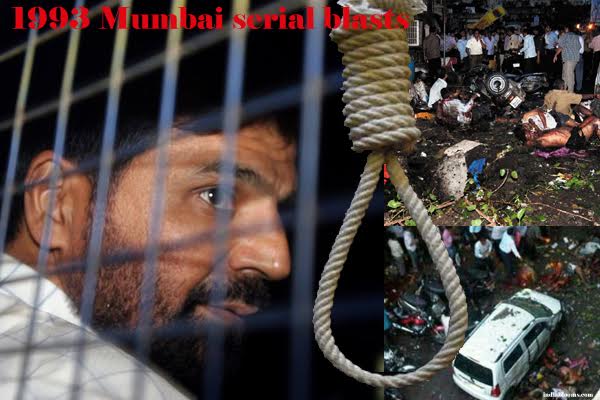
Execution of Yakub Memon cruel and inhuman: Amnesty International
New Delhi, July 30 (IBNS) The execution of 1993 Mumbai serial blasts convict Yakub Memon marks another disheartening use of the death penalty in India, said Amnesty International India on Thursday.
Yakub Abdul Razak Memon was executed by hanging this morning at the Nagpur Central jail.
The 53-year-old was convicted for his involvement in a series of bomb blasts in Mumbai in March 1993 which killed 257 people.
In 2007, he was convicted and sentenced to death under the Terrorist and Disruptive Activities (TADA) Act. Amnesty International said the TADA law contained provisions incompatible with international fair trial standards.
“This morning, the Indian government essentially killed a man in cold blood to show that killing is wrong,” said Aakar Patel, Executive Director, Amnesty International India.
“This execution will not deliver justice for the 1993 Mumbai blasts. It is a misguided attempt to prevent terrorism, and a disappointing use of the criminal justice system as a tool for retribution.”
Several concerns around the execution were raised by activist groups, including issues of whether courts had considered all relevant circumstances during sentencing, and the length of Yakub Memon’s detention.
“Indian authorities often find it convenient to hold up capital punishment as a symbol of their resolve to tackle crime, and choose to ignore more difficult and effective solutions like improving investigations, prosecutions and care for victims’ families,” said Aakar Patel.
Yakub Memon’s execution is the third in under three years in India, after an eight-year hiatus. India is among a minority of countries which continue to use the death penalty. 140 countries, more than two-thirds of the world’s countries, around the world have abolished the death penalty in law or practice.
Amnesty International says it opposes the death penalty in all cases without exception, regardless of the nature or circumstances of the crime; guilt, innocence or other characteristics of the individual; or the method used by the state to carry out the execution.
It says it opposes it as a violation of the right to life as recognized in the Universal Declaration of Human Rights and the ultimate cruel, inhuman and degrading punishment
The 53-year-old was convicted for his involvement in a series of bomb blasts in Mumbai in March 1993 which killed 257 people.
In 2007, he was convicted and sentenced to death under the Terrorist and Disruptive Activities (TADA) Act. Amnesty International said the TADA law contained provisions incompatible with international fair trial standards.
“This morning, the Indian government essentially killed a man in cold blood to show that killing is wrong,” said Aakar Patel, Executive Director, Amnesty International India.
“This execution will not deliver justice for the 1993 Mumbai blasts. It is a misguided attempt to prevent terrorism, and a disappointing use of the criminal justice system as a tool for retribution.”
Several concerns around the execution were raised by activist groups, including issues of whether courts had considered all relevant circumstances during sentencing, and the length of Yakub Memon’s detention.
“Indian authorities often find it convenient to hold up capital punishment as a symbol of their resolve to tackle crime, and choose to ignore more difficult and effective solutions like improving investigations, prosecutions and care for victims’ families,” said Aakar Patel.
Yakub Memon’s execution is the third in under three years in India, after an eight-year hiatus. India is among a minority of countries which continue to use the death penalty. 140 countries, more than two-thirds of the world’s countries, around the world have abolished the death penalty in law or practice.
Amnesty International says it opposes the death penalty in all cases without exception, regardless of the nature or circumstances of the crime; guilt, innocence or other characteristics of the individual; or the method used by the state to carry out the execution.
##YakubMemonHanging
# supreme court
# 1993 Mumbai blasts
# #YakubToHang
# #YakubClemencyPlea
# #YakubBuriedMumbai
# Mumbai tight security
# Amnesty International
Support Our Journalism
We cannot do without you.. your contribution supports unbiased journalism
IBNS is not driven by any ism- not wokeism, not racism, not skewed secularism, not hyper right-wing or left liberal ideals, nor by any hardline religious beliefs or hyper nationalism. We want to serve you good old objective news, as they are. We do not judge or preach. We let people decide for themselves. We only try to present factual and well-sourced news.
Support objective journalism for a small contribution.
Latest Headlines
'After 26 days of hunger, do I still need to prove my sincerity?' Sonam Wangchuk hits back at critics
Sat, Jul 25 2026
'Too late!': Kolkata students reject PM Modi's NEET assurance, demand Dharmendra Pradhan's exit
Fri, Jul 24 2026
Amid CJP protest heat, PM Modi tells ministers to connect with youth through Instagram Reels
Fri, Jul 24 2026
Centre stands firm behind Dharmendra Pradhan, rules out resignation despite CJP pressure: Report
Fri, Jul 24 2026
'Supreme Court can never refuse a hearing': CJI Surya Kant clarifies remarks on students' plea
Fri, Jul 24 2026
Big boost for India-Israel trade as FTA talks make key progress
Fri, Jul 24 2026