


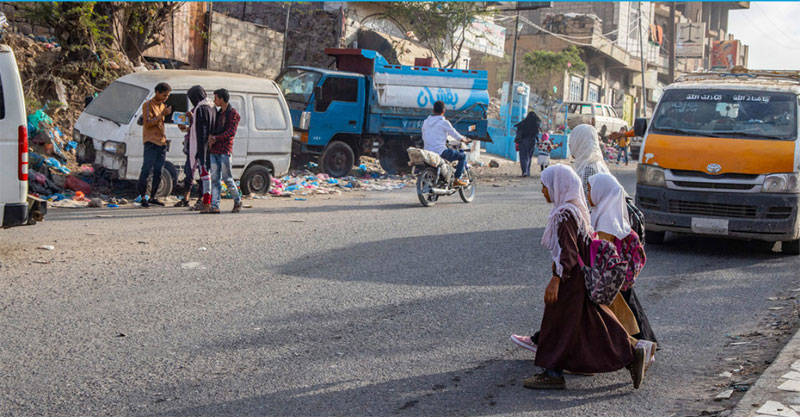
 Road Deaths
With 1.3 million annual road deaths, UN wants to halve number by 2030
New York: Road accidents are still responsible for 1.3 million annual deaths and 50 million injuries all over the world, but the United Nations has a Global Plan to halve road deaths and injuries by 2030.
The plan is a key part of the Decade of Action for Road Safety 2021-2030 and was discussed, on Friday, at an event supporting the High-Level Meeting on Global Road Safety at the General Assembly in New York.
Opening the discussion, the President of General Assembly, Abdulla Shahid, said that the world needs to address this “unnecessary and tragic burden on families, communities and economies.”
“Road accidents are entirely preventable, and our priority must be exactly that, to implement preventive measures”, he continued.
Necessary action
Mr. Shahid highlighted the importance of the Global Plan, but warned that “unless it is implemented, it is nothing more than a plan of action.”
Looking ahead, he said implementation by national and local governments will require two main elements: financing and the engagement of relevant actors.
With a notable funding gap in most countries, 90% of road deaths happen in low and middle-income countries.
For Mr. Shahid, this means that achieving the targets will require increased support to these countries.
Road traffic crashes are also the leading killer of children and young people worldwide, aged five to 29.
As things stand, they are set to cause a further estimated 13 million deaths and 500 million injuries during the next decade.
Personal stories
During Friday’s event, Member States heard from families who lost loved ones, politicians that led the way, grassroot youth working on advocacy programs, and both government and non-governmental organizations.
For the President of the General Assembly, “each is a story that will foster greater understanding and knowledge on how we can better engage on global road safety.”
Mr. Shahid invited Member States, civil societies, and the international community to use these exchanges “as an opportunity to build collective commitments and strengthened partnerships”.
“Global road safety is a shared responsibility that must be prioritized and integrated”, he argued.
For him, achieving safety would contribute to the achievement of Sustainable Development Goals under education, health, and the environment, among others.
The High‑Level Meeting on the topic will be held in July next year, under the theme “The 2030 horizon for road safety: securing a decade of action and delivery”.
Support Our Journalism
We cannot do without you.. your contribution supports unbiased journalism
IBNS is not driven by any ism- not wokeism, not racism, not skewed secularism, not hyper right-wing or left liberal ideals, nor by any hardline religious beliefs or hyper nationalism. We want to serve you good old objective news, as they are. We do not judge or preach. We let people decide for themselves. We only try to present factual and well-sourced news.
Support objective journalism for a small contribution.


