


 UN
UN
UN officials see progress as global food prices drop amid ongoing Black Sea grain deal shipments
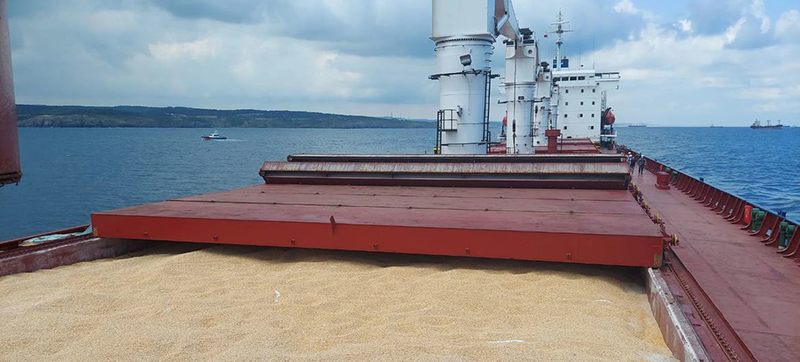
New York: Two vital objectives of the Black Sea grain deal brokered by the United Nations and Türkiye are already being achieved, a senior UN official said on Tuesday, pointing to the steady decrease in international food prices and the increasing availability of badly needed grain from Ukraine as signs of early success.
UN trade chief Rebeca Grynspan reported that food prices had steadily gone down and exports from Ukraine and Russia had increased since a July 22 grain deal, “easing the pain … for 1.6 billion people in the world that have been facing a cost-of-living rise, especially because of the increase in food prices.”
Benefits for vulnerable people everywhere
Speaking to reporters in Geneva, Ms. Grynspan, who leads the UN team facilitating the unimpeded access to food and fertilizer from Russia, said that the Food and Agriculture Organization (FAO) had reported that food prices declined globally in August for the fifth straight month. “Reintegrating [grain] and fertilizers into global markets, lowering global food prices so that vulnerable people everywhere could access affordable food was our main objective.”
At the same time, however, she expressed concern that this international price drop was not being seen in domestic markets, and developing countries especially were still struggling with high food prices, as well as inflation and currency devaluations. “There is still a problem for many developing countries because the prices are not going down for them as we have wished. So, there is much more to be done.”
Fertilizer shipments key to deal
Responding to a question regarding reports of lagging shipments in Russian fertilizers, Ms. Grynspan said fertilizer and ammonia were also included in the initial agreements signed in Türkiye.
“The UN continues to pursue all efforts to allow for a positive outcome on Russian exports of ammonia to international markets,” she said, stressing that fertilizers are “a very important part of this deal. Fertilizers now are three times the price they were before the COVID-19 pandemic [so] “the crisis of affordability that we have now will be a catastrophic crisis if we don’t solve the problem of fertilizer.”
By example, Ms. Grynspan, who is also the head of the UN Conference on Trade and Development (UNCTAD), said that the sowing season for new crops in West Africa is over and planting was down by a very high percentage because of fertilizer costs.
Joining the video news conference from Ankara, Amir Abdulla, the UN Coordinator for the Black Sea Grain Initiative, said that 129 fully laden ships carrying over 2.8 million tons of grain have left the three designated Ukrainian Black Sea ports for different countries.
Looking towards more shipments
“We’re close to the 3 million mark. Hopefully we’ll do that the next day or, or so and the rate at which we it took us nearly, it was over three weeks,” he said, adding that “we’d really like to see a slight increase on that. So, there are some efficiencies that we probably need to try and introduce if we can. But if we hold at those levels, we’re more or less in line with [where we thought we’d be] for this part of the agreement.”
Picking up on some points made by Ms. Grynspan, he said that indeed there were “some issues sometimes in local prices, but what we have seen is with the prices dropping an interesting phenomenon, in one or two countries is that because of that drop people have been hoarding grain and hoping to sell it at a high price are now putting more on the market.... “Hopefully that will bring some of those local prices down.”
Support Our Journalism
We cannot do without you.. your contribution supports unbiased journalism
IBNS is not driven by any ism- not wokeism, not racism, not skewed secularism, not hyper right-wing or left liberal ideals, nor by any hardline religious beliefs or hyper nationalism. We want to serve you good old objective news, as they are. We do not judge or preach. We let people decide for themselves. We only try to present factual and well-sourced news.
Support objective journalism for a small contribution.


