


 Somalia
Somalia: UNICEF warns of unprecedented child deaths
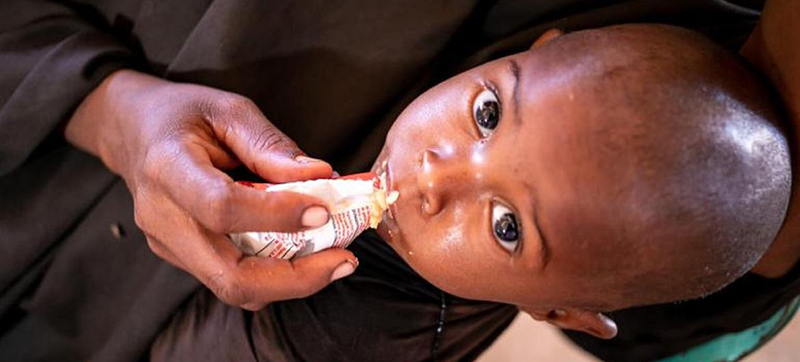
New York: Thousands of severely malnourished boys and girls in Somalia are at risk of dying, the UN Children’s Fund (UNICEF) warned on Tuesday, urging donors to step up support amid historic drought.
“Without greater action and investment, we are facing the death of children on a scale not seen in half a century,” Spokesperson James Elder told journalists in Geneva.
A child is admitted to a health facility for treatment of severe acute malnutrition “every single minute of every single day”, he said.
A looming tragedy
Latest rates reveal some 44,000 admissions since August, or one child a minute.
“Severely malnourished children are up to 11 times more likely to die of diarrhoea and measles than well-nourished children. With rates such as these, Somalia is on the brink of a tragedy at a scale not seen in decades,” said Mr. Elder.
UN agencies have been warning for months about the looming famine in the Horn of Africa, where the worst drought in 40 years is affecting more than 20 million people across several countries.
In Somalia, famine is projected in Baidoa and Burhakaba districts in Bay Region between this month and December, if aid does not reach those most in need, the UN humanitarian affairs office, OCHA, reported on Tuesday.
Worse yet to come
"When people speak of the crisis facing Somalia today, it has become common for frightful comparisons to be made with the famine of 2011 when 260,000 people died. However, everything I am hearing on the ground – from nutritionists to pastoralists – is that things today actually look worse,” said Mr. Elder.
"In 2011, after three failed rains, the affected population was half of what it is now, and the overall conditions – rain and harvest - were on the mend. Today: it’s been four failed rains; the forecast for the fifth rains is looking pretty grim, and the affected population is twice the size of 2011. Things are bad and every sign indicates that they are going to get worse.”
The UNICEF Spokesperson gave the crisis a human face, specifically that of a child “whose life hangs in the balance”.
‘Find and treat’
Although thousands of these children have made it to treatment centres, carried by mothers who have walked for days, he feared for those who are not able to reach support, particularly in a country where access to healthcare is continually hampered by terrorism and threats to aid workers.
Mr. Elder outlined how UNICEF is deploying mobile teams to “find and treat” children with malnutrition, including in hard-to-access locations.
Staff have treated more than 300,000 children for severe acute malnutrition this year so far, while UNICEF’s emergency water trucking has reached 500,000 people in the last three months.
"But funding challenges remain,” he stated.
While UNICEF has received “substantial funds” in the past months from the United States, the United Kingdom and the European Commission, Mr. Elder stressed that long-term funding will be critical “to prevent famine from happening, again, and again”.
Revised humanitarian appeal
Relatedly, the UN humanitarian team in Somalia has revised its 2022 appeal from $1.46 billion to $2.26 billion, a 55 per cent increase since the launch at the start of the year.
Most of the funding, 80 per cent, is for drought response.
“While it is late in the year to revise an annual appeal, it was deemed essential because humanitarian needs have increased steeply, while the funding ask has not,” said Jens Laerke, OCHA Spokesperson.
An estimated 7.8 million people are affected by the drought, including more than 1.1 million displaced people.
Critical gaps remain
The revised plan also targets more people, from 5.5 million at the beginning of the year to 7.6 million.
After the revision, it is about 45 per cent funded.
Mr. Laerke said the UN and partners have reached 5.7 million people with some form of assistance, “but critical gaps remain, including in core lifesaving sectors”.
Support Our Journalism
We cannot do without you.. your contribution supports unbiased journalism
IBNS is not driven by any ism- not wokeism, not racism, not skewed secularism, not hyper right-wing or left liberal ideals, nor by any hardline religious beliefs or hyper nationalism. We want to serve you good old objective news, as they are. We do not judge or preach. We let people decide for themselves. We only try to present factual and well-sourced news.
Support objective journalism for a small contribution.


