


 Sahel
Sahel
Scale-up action to combat child malnutrition in Africa’s Sahel
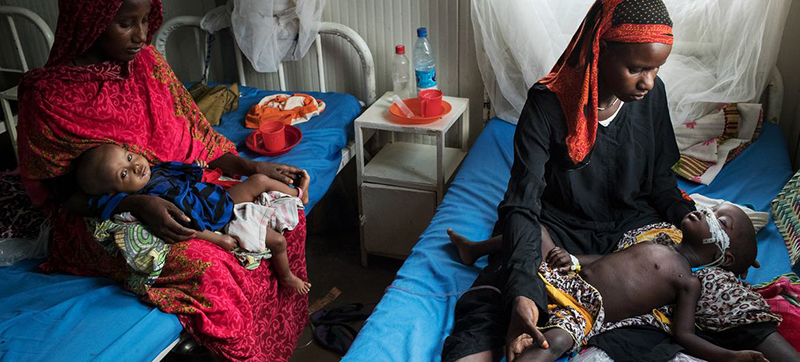
New York: An estimated 6.3 million children under five, in six countries in Africa’s Sahel region, will suffer from wasting this year, UN agencies and their partners warned in a publication issued on Wednesday.
The West and Central Africa Nutrition working group fears at least 900,000 young lives could be at risk across Burkina Faso, Chad, Mali, Mauritania, Niger and Senegal.
They said the number of under fives in the region expected to suffer from global acute malnutrition has never been so high, with a 27 per cent increase expected this year compared to 2021, marking the fifth consecutive year of record highs.
The working group brings together UN agencies such as the UN Children’s Fund, (UNICEF), the World Food Programme (WFP), and the World Health Organization (WHO), and non-governmental organizations (NGOs) which include Action Against Hunger (ACF), Concern, and Save the Children.
‘Business unusual’ approach
Their joint note advocates for a paradigm shift to both urgently respond to immediate needs and address the root causes of malnutrition.
“As conflicts, insecurity, socio-economic crisis and recurrent extreme climatic events in the region continue to deteriorate and further aggravate the nutrition of children, we need to shift to ‘business unusual’ to address their needs in a sustainable way,” said Marie-Pierre Poirier, UNICEF Regional Director for West and Central Africa.
“While treatment remains an imperative to save the lives of children most severely affected, we must shift the paradigm and focus on scaling interventions to prevent malnutrition, especially in the most affected locations. The time has come to address the root causes of malnutrition of children in the region with determination and urgency.”
Address underlying factors
The partners are calling for a multi-sectoral approach to address multiple underlying factors which include widespread food insecurity; inadequate dietary and care practices for infants and young children; poor maternal nutrition, high incidence of childhood illnesses; inadequate access to water, sanitation and health services; as well as gender and other social norms.
A particular focus on adolescent girls is key to break the inter-generational cycle of malnutrition, they added.
The working group said a total of $93.4 million is required to prevent wasting among children, and pregnant and lactating mothers, based on data from nine countries.
However, there is a $56.2 million funding gap, including $26.3 million to cover needs during the lean season which runs from June to September.
For treatment of wasting, the funding shortfall is $77.5 million, of which $42 million is needed to treat severe wasting, the most life-threatening form of malnutrition.
Ukraine war impact
At the same time, longer-term and flexible investments for nutrition are required to sustainably address financing issues, including on the part of Governments.
“And now the Ukraine crisis is leading to an inflation of the food prices, increasing the pressure on the populations already heavily impacted by the crises: a severe food and nutrition insecurity is near if we do not act now in all the hot spots,” said Mamadou Diop, Regional Representative for ACF.
Currently, only 21 per cent of young children, from 6 to 23 months, receive the minimum number of food groups to grow well.
As there will likely be an increase in supply needs, and in the cost of food and nutrition supplies, the partners have called for identifying local solutions, such as partnerships with women’s cooperatives, youth engagement for better community involvement, and public-private initiatives.
The focus must be on young children, adolescent girls and pregnant and breastfeeding women, they said.
Support Our Journalism
We cannot do without you.. your contribution supports unbiased journalism
IBNS is not driven by any ism- not wokeism, not racism, not skewed secularism, not hyper right-wing or left liberal ideals, nor by any hardline religious beliefs or hyper nationalism. We want to serve you good old objective news, as they are. We do not judge or preach. We let people decide for themselves. We only try to present factual and well-sourced news.
Support objective journalism for a small contribution.


