


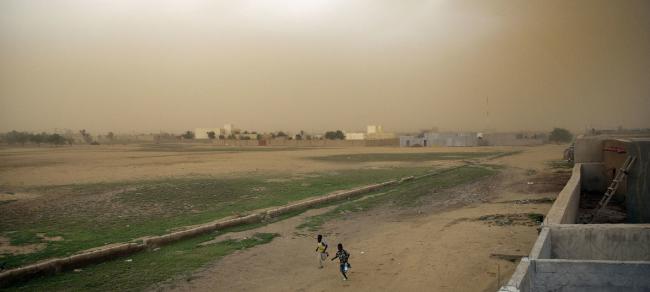
Sand and dust storms, a 'human well-being' issue, says high level panel
New York, July 17 (IBNS): From higher morbidity and mortality rates to reduced economic growth, the impact of sand and dust storms can be major, especially for lower-income nations and vulnerable communities. However, with stronger collaboration and improved information-sharing, much of the risk could be managed and mitigated, a UN meeting heard on Monday.
The high-level General Assembly meeting examined the risks posed by sand and dust storms, known by the acronym SDS, and the various opportunities available to mitigate those risks and fill the existing knowledge gaps.
“For people, the stakes of inaction on this issue are high,” said Miroslav LajÄák, President of the UN General Assembly. “Human well-being is at risk.”
Various studies have revealed the severe effects that sand and dust storms can have on health, including respiratory, cardiovascular, skin and eye diseases.
The panel also highlighted the major economic impact that these meteorological events can have: “One sand or dust storm can cost hundreds of millions of dollars,” explained Mr. LajÄák. “The losses are really felt in the agriculture, transportation and infrastructure sectors. These are resources that could have been channeled towards sustainable development at a time when we need to mobilize more for the 2030 Agenda”.
As this is a phenomenon that affects more than 45 countries – principally in the Sahel, Central and East Asia, the Middle East as well as North America and the Caribbean – Governments and experts have sought solutions to mitigate the risk, build resilience and strengthen the amount of information on the subject globally. The UN World Meteorological Organization's Warning Advisory and Assessment System is now capable of issuing forecasts as far as three days in advance. However, ensuring that this information reaches the most vulnerable to reduce death rates as well as negative impacts to their livelihoods, is a challenge that remains to be tackled.
“It is unconscionable that information that can help the health of people affected…is not available to them,” said Kofi Annan, former UN Secretary-General, in a video played at the event.
Among the solutions proposed, the panelists cited: greening areas where SDS events tend to be born by planting more trees; improving information channels so even the most vulnerable communities can adequately prepare and protect themselves; and enhancing cross-border collaboration so countries can share lessons learned and implement holistic disaster risk reduction measures.
“For the last three years, the General Assembly has pledged to take action on sand and dust storms. But we cannot do this alone,” said Mr. LajÄák, calling for “more Member States to work in tandem with the Rio Conventions, on climate change, biodiversity, and importantly, combatting desertification” and address the issue in a durable and lasting fashion.
Support Our Journalism
We cannot do without you.. your contribution supports unbiased journalism
IBNS is not driven by any ism- not wokeism, not racism, not skewed secularism, not hyper right-wing or left liberal ideals, nor by any hardline religious beliefs or hyper nationalism. We want to serve you good old objective news, as they are. We do not judge or preach. We let people decide for themselves. We only try to present factual and well-sourced news.
Support objective journalism for a small contribution.


