


 Mercenary Soldiers
Rise in mercenary forces trigger ‘rampant’ human rights violations
New York: Human rights violations committed by mercenaries and private security companies create grave challenges for victims seeking justice and redress, UN-appointed independent human rights experts warned on Tuesday.
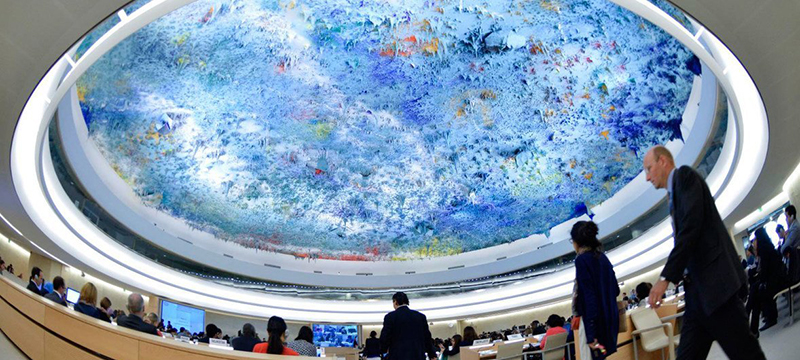
Presenting its new report to the Human Rights Council 51st session, the Working Group on the use of mercenaries said that this was due to the particularity of the perpetrators and the way they operate.
They also noted that the proliferation of mercenaries, contractors operating as soldiers for hire and private security companies in conflict, post-conflict and peacetime settings, has increased the number of violations of human rights and international humanitarian law.
“Deplorable gaps in accountability, access to justice, and remedies for victims of violations perpetrated by such actors are rampant,” said Sorcha MacLeod, Chair-Rapporteur of the Working Group, who presented the report to the Council.
‘Victim-centred approach’
The experts explained that, in the contexts in which they operate, the impacts of their actions are of grave concern.
Persons in vulnerable situations, women, children, migrants and refugees, people with disabilities, LGBTI+ persons, older persons, minorities, human rights defenders and journalists, are experiencing particularly negative impacts, the experts highlighted.
“Given this bleak situation, a holistic and victim-centred approach is imperative to ensure victims’ effective access to justice and remedy,” Ms. MacLeod said.
Investigate and punish offenders
The report highlights a lack of accountability and the common challenges faced by victims in accessing justice and effective remedies to overcome the damage mercenaries leave in their wake.
It drew specific attention to the secrecy and opacity surrounding the activities of mercenaries, military contractors hired to kill, and private security companies; their complex business and corporate structures, issues related to jurisdiction; and gaps in national and international regulation.
“States have obligations under international human rights law to prevent, investigate, and punish violations of human rights and international humanitarian law, and to provide effective remedies and reparation to victims of mercenaries, mercenary-related actors, and private military and security companies,” the experts said.
They concluded by urging States to adopt national legislation to “regulate the activities of these actors, punish perpetrators, and provide redress for victims are part of these implementation efforts”.
The experts
Special Rapporteurs and independent experts are appointed by the Geneva-based UN Human Rights Council to examine and report back on a specific human rights theme or a country situation. The positions are honorary and the experts are not paid for their work.
The Working Group is composed of five independent experts, of balanced geographical representation, who are elected by the Human Rights Council for a one-time renewable three-year term.
Ms. MacLeod was appointed as Chair-Rapporteur in November 2021.
Support Our Journalism
We cannot do without you.. your contribution supports unbiased journalism
IBNS is not driven by any ism- not wokeism, not racism, not skewed secularism, not hyper right-wing or left liberal ideals, nor by any hardline religious beliefs or hyper nationalism. We want to serve you good old objective news, as they are. We do not judge or preach. We let people decide for themselves. We only try to present factual and well-sourced news.
Support objective journalism for a small contribution.


