


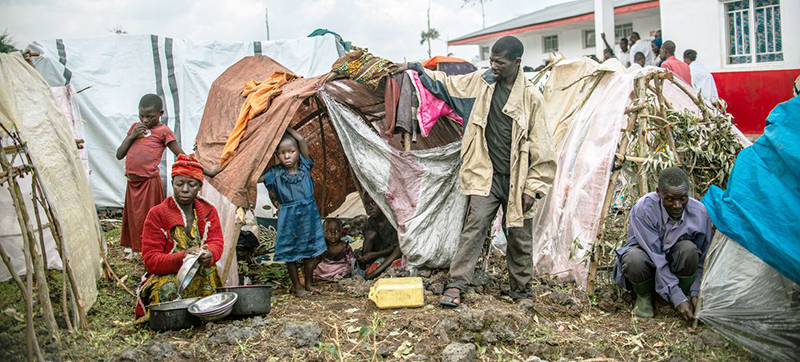
 Fleeing
Numbers forced to flee passes 100 million; many displaced for decades: UNDP
New York; Humanitarian aid alone cannot overcome record levels of internal displacement globally, the UN Development Programme (UNDP) said in a report published on Tuesday, calling for urgent action to support people uprooted by climate, conflict and crisis.
For the first time ever, the number of people forced to flee their homes surpassed 100 million this year. Most, 59.1 million, are displaced within their own countries, often for years or even decades.
These internally displaced persons (IDPs) struggle to cover their basic needs, find decent work, or have a stable source of income, among other challenges.
UNDP described their plight as an “invisible crisis” because it rarely makes the news.
End marginalization of IDPs
As climate change could force more than 216 million to move elsewhere within their homelands by mid-century, the report advocates for longer-term development solutions to reverse internal displacement.
“More efforts are needed to end the marginalization of IDPs who must be able to exercise their full rights as citizens including through access to vital services such as healthcare, education, social protection and job opportunities,” said UNDP Administrator Achim Steiner.
“In tandem with critical humanitarian assistance, this stronger development-focused approach will be vital to set the conditions for pathways to lasting peace, stability and recovery.”
Governments must act
The report - Turning the tide on internal displacement: A development approach to solutions – calls for placing this “invisible crisis” on the international agenda.
It cites sample data from a survey of some 2,653 IDPs, and people from host communities, in eight countries: Colombia, Ethiopia, Indonesia, Nepal, Nigeria, Papua New Guinea, Somalia and Vanuatu.
A third of the IDPs said they had become jobless, while nearly 70 per cent do not have enough money to meet their household needs. One third also reported that their health had worsened since fleeing their homeland.
The data was collected by the Internal Displacement Monitoring Centre (IDMC) between January 2021 and January 2022.
The report underscored that overcoming internal displacement depends on governments implementing key development solutions, including ensuring equal access to rights and basic services, promoting socio-economic integration, restoring security and building social cohesion.
UNDP also highlighted the need for better data and research.
The agency underlined its commitment to bridging this gap through a Solutions to Internal Displacement Index, that will monitor progress and help governments shift from humanitarian to development responses.
Support Our Journalism
We cannot do without you.. your contribution supports unbiased journalism
IBNS is not driven by any ism- not wokeism, not racism, not skewed secularism, not hyper right-wing or left liberal ideals, nor by any hardline religious beliefs or hyper nationalism. We want to serve you good old objective news, as they are. We do not judge or preach. We let people decide for themselves. We only try to present factual and well-sourced news.
Support objective journalism for a small contribution.


