


 Slavery
Legacy of slavery still scars society, blocks progress says UN chief
New York: The legacy of the transatlantic slave trade “reverberates to this day”, just as modern-day enslavement is growing, UN Secretary-General António Guterres has said.
In a message ahead of commemorations for the International Day for the Abolition of Slavery, on 2 December, Mr. Guterres said that societies remain scarred by the historical suffering of enslaved Africans, and are unable to offer everyone the same development opportunities.
Eradicate slavery now
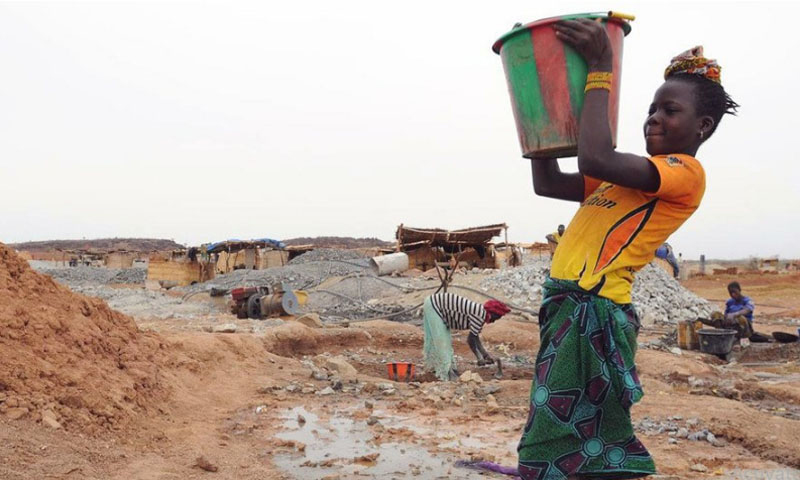
The UN chief also urged action to identify and recommit to eradicating all forms of contemporary slavery, from people trafficking to sexual exploitation, child labour, forced marriage and the use of children in armed conflict.
Citing the latest Global Estimates of Modern Slavery on forced labour and forced marriage, Mr. Guterres said that 50 million people were enslaved during the course of last year.
He explained that marginalised groups are most at risk, such as ethnic, religious and linguistic minorities, along with migrants, children and LGBTI individuals; and that most of these vulnerable persons are women.
“Increased action needs to be taken with full participation of all stakeholders, including the private sector, trade unions, civil society and human rights institutions”, he said.
“I also urge all countries to protect and uphold the rights of victims and survivors of slavery.”
Slavery on the rise
Latest estimates by the International Labour Organisation (ILO) show that forced labour and forced marriage have increased significantly in the last five years.
There were around 10 million more people enslaved in 2021, compared to 2016’s global estimates, according to the UN, bringing the total to 50 million worldwide.
Although modern slavery is not defined in law, it is used as an umbrella term covering practices such as forced labour, debt bondage, forced marriage, and human trafficking.
Still pervasive
It encompasses all situations of exploitation where a person cannot refuse, or leave, because of threats, violence, coercion, deception, or plain abuse of power.
Modern slavery occurs in almost every country in the world, and cuts across ethnic, cultural and religious lines.
Contrary to conventional assumption, some 52 per cent of all forced labour and a quarter of all forced marriages, can be found in upper-middle income or high-income countries.
Almost four out of five of those in forced commercial sexual exploitation, are women or girls.
New 'global data warehouse' on forced labour
Coinciding with the International Day, ILO is launching a new Forced Labour Observatory (FLO), developed by the ILO’s Bridge Project to respond to the request from the UN labour agency's governors to develop “a global data warehouse on forced labour and trafficking.”
The FLO database will be a repository of global and country level information on forced labour - a “one stop shop” for information on the scourge.
Country profiles have been developed for all 187 ILO member States using publicly available information from reputable sources, to provide an overview of national responses to tackle this crime.
Support Our Journalism
We cannot do without you.. your contribution supports unbiased journalism
IBNS is not driven by any ism- not wokeism, not racism, not skewed secularism, not hyper right-wing or left liberal ideals, nor by any hardline religious beliefs or hyper nationalism. We want to serve you good old objective news, as they are. We do not judge or preach. We let people decide for themselves. We only try to present factual and well-sourced news.
Support objective journalism for a small contribution.


