


Finland tops Global Illicit Trade Environment prevention index
New York, June 8 (IBNS): The Transnational Alliance to Combat Illicit Trade (TRACIT) and The Economist Intelligence Unit (EIU) have released the Global Illicit Trade Environment Index (the Index), ranking 84 countries on the extent they enable or prevent illicit trade, with Finland topping the chart with a score of 85.6.
“The Index provides essential information to help policy makers better understand the regulatory environment and economic circumstances that encourage illicit trade,” said Jeffrey Hardy, Director-General at TRACIT. “Illicit trade not only hurts consumers and takes revenue away from governments, it threatens the security of nations by supporting transnational criminal syndicates and terrorist groups, and governments and the private sector must work together to fight it.”
Finland topped the chart, just ahead of United Kingdom.
The rest of the top 10 includes a handful of European countries (Sweden, Austria, Netherlands, Denmark and Germany), along with the United States, Australia and New Zealand.
Not surprising, at the bottom of the Index ranking is a group of developing economies from all regions of the globe. Libya ranks last with a score of 8.4, and is joined by Iraq in 83rd place, scoring less than six points better. Filling out the bottom ten of the Index are: Myanmar, Laos, Venezuela, Cambodia, Kyrgyzstan, Belize and Ukraine.
“Policy makers and all stakeholders can use the Index as a tool to make informed decisions and formulate effective strategies to address the serious threats posed by illicit trade against the health and security of our societies,” said TRACIT Deputy Director-General Stefano Betti. “Economies that are at the top concentrate on implementation and enforcement and they need to provide leadership to help countries with lower scores to build a better environment to prevent illicit trade.”
Regionally, Europe (34 economies in the index), earns the highest the average score (68.0). The Asia-Pacific (21 economies) comes second at 56.0 and the Americas (19 economies), including the US and Canada, is third at 54.0. The Middle East and Africa (10 economies) comes in last, with an average score of 50.0.
The Index was launched today simultaneously in Hong Kong, Brussels and Panama City to raise global awareness on this very important global crisis.
Guided by the Index data, TRACIT is advocating policy recommendations inspired by the four thematic categories upon which the Index is constructed: (i) government policy, (ii) supply and demand, (iii) transparency and trade, and (iv) customs environment.
“We have taken the Index data as a starting point to develop recommended changes and strategies to tackle illicit trade across sectors and to address human trafficking. These recommendations are universal in nature, providing a ‘checklist’ of fundamental measures governments can implement to improve their ability to defend against illicit trade,” said Mr Betti. “The urgency to address illicit trade is clear and it’s time to prioritize and implement solutions that will have a sustained impact.”
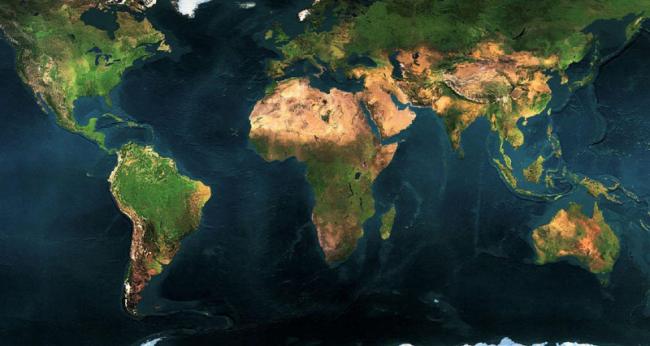
Image: Internet Wallpaper
Support Our Journalism
We cannot do without you.. your contribution supports unbiased journalism
IBNS is not driven by any ism- not wokeism, not racism, not skewed secularism, not hyper right-wing or left liberal ideals, nor by any hardline religious beliefs or hyper nationalism. We want to serve you good old objective news, as they are. We do not judge or preach. We let people decide for themselves. We only try to present factual and well-sourced news.
Support objective journalism for a small contribution.


