


 UNESCO
‘Decisive steps’ needed to keep boys in school – UNESCO report
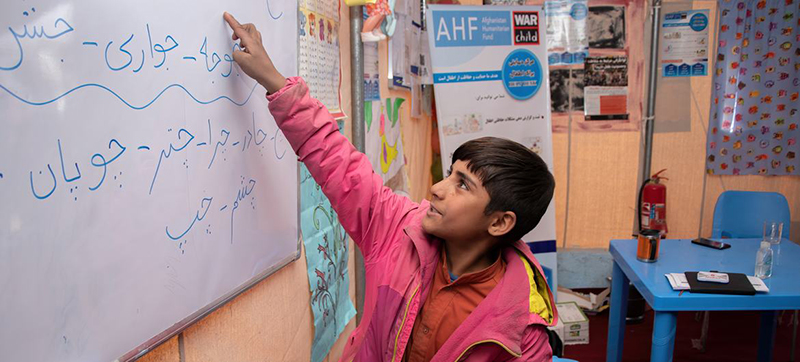
New York: Although girls have more difficulty accessing education and make up most out-of-school children at the primary level, challenges facing boys are increasing at later stages, according to a report published on Wednesday by the UN Educational, Scientific and Cultural Organization (UNESCO).
Leave no child behind: Global report on boys’ disengagement from education, sheds light on the factors driving boys’ disengagement from the classroom.
The report highlights a global phenomenon: Harsh discipline, corporal punishment, and other forms of violence at school; gendered norms and expectations; and other factors, are preventing boys from achieving academically, while increasing absenteeism and dropouts.
“To make education a universal right, we need to ensure that all youth have the educational opportunities to successfully shape their lives and futures,” UNESCO chief Audrey Azoulay said in the foreword.
“As this report underlines, we need to take decisive steps to keep boys in school and support them throughout their education”.
The global picture
UNESCO data reveals that for every 100 women globally, only 88 men are enrolled in tertiary education; and in 73 countries, fewer boys than girls are registered in upper-secondary schools, while the opposite is the case in a further 48 countries.
Moreover, in all regions except sub-Saharan Africa, teenagers are underrepresented in higher education – particularly in North America, Western Europe, Latin America and the Caribbean, where 81 young men for every 100 young women are in fulltime learning.
In East Asia and the Pacific, the figure is 87, while in the Arab States and Central and Eastern Europe region, it is 91 per 100.
Barriers to boys’ education
Of the 160 million children engaged in labour activity in 2020, the report reveals that 97 million were boys and cites a lack of a “protective legal framework” as one of the main reasons for their exclusion.
Of 146 countries with data, only 55 have a minimum age of employment aligned with the end of the countries’ stipulated years of compulsory education and above the age of 15, while 31 per cent have a minimum age for employment below the age of 15 or do not clearly define a minimum age.
“Poverty and child labour can lead boys to drop out,” said Ms. Azoulay, adding that to prevent this, States must urgently “align the minimum age of employment with the end of the compulsory education.
Warning signs
In some countries, signs of boys already falling behind educationally appear at the end of the first level, according to Leave no child behind.
In 57 countries which have produced data, 10-year-old boys performed worse than girls in reading – a trend that continued at the secondary level.
This is seen across East Asia and the Pacific, Latin America and the Caribbean, and the Arab States, which show some of the highest risk of boys dropping out of school.
“Fulfilling this promise of equality not only benefits boys and men; it is a step forward for all humankind,” said Ms. Azoulay adding that “inclusive and equitable education is everyone’s business”.
Action points
The UNESCO report also reveals that only a few programmes and initiatives address the phenomenon of boys’ disengagement from education.
To prevent them from dropping out and reverse the downward spiral, it provides a set of concrete recommendations that encompass making learning safe and inclusive; investing in better data and evidence; building and financing equitable education systems; and promoting integrated and coordinated approaches to improve education for all learners.
“When everyone has equal rights and opportunities, we all stand to gain,” the UNESCO chief said.
Support Our Journalism
We cannot do without you.. your contribution supports unbiased journalism
IBNS is not driven by any ism- not wokeism, not racism, not skewed secularism, not hyper right-wing or left liberal ideals, nor by any hardline religious beliefs or hyper nationalism. We want to serve you good old objective news, as they are. We do not judge or preach. We let people decide for themselves. We only try to present factual and well-sourced news.
Support objective journalism for a small contribution.


