


‘Think beyond farm jobs’ to reach sustainable development, UN agriculture chief advises African youth
New York, Aug 21 (IBNS): For the African continent to achieve sustainable development, more jobs must be created for its young people, including in the digitalized agriculture sectors, the United Nations agriculture chief told an international conference on Monday.
“We need to take action to make agriculture more attractive to young people,” underscored José Graziano da Silva, Director-General of the Food and Agriculture Organization (FAO), at the Youth Employment in Agriculture Conference in Kigali, the capital of Rwanda.
“They must perceive agriculture as a remunerative and profitable sector and the dissemination of information and communication technologies (ICTs) in rural areas play an important role in this regard,” he added.
Over 60 percent of Africa’s estimated 1.2 billion people are under the age of 25 –mostly living in rural areas.
Yet, there is a growing uncertainty over the continent’s preparedness to tap this precious resource, which requires that tens of millions of rural area jobs be created annually for the continent to harness the dividends of its youth.
Graziano da Silva’s remarks came at the opening of the two-day event, which is co-organized by FAO, the Rwandan Government and the African Union (AU) to share knowledge and best practices on agriculture, youth employment, entrepreneurship and ICT innovations to prioritize interventions going forward.
Other keynote speakers included Li Yong, Director-General of the UN Industrial Development Organization (UNIDO); Geraldine Mukeshimana, Rwanda's Minister of Agriculture and Animal Resources; and Josefa Leonel Correia Sacko, AU Commissioner for Rural Economy and Agriculture.
Graziano da Silva noted that due to continued population growth, rapid urbanization and dietary changes accompanying rising household incomes, Africa’s food demand is projected to grow in the coming years by more than 50 per cent, providing “an invaluable and untapped potential” to address youth unemployment challenges, albeit amid numerous constraints.Growing population means growing food demands
He pointed out that young people are usually employed on a casual or seasonal basis, with limited access to relevant education and technical training; limited access to finance, information and markets; and low involvement in decision-making processes.
“These constraints become a bottleneck that also impede young people to start an agricultural business of their own. As a result, young rural people are migrating,” explained the FAO chief.
Meanwhile, the World Bank expects that by 2030, African agribusinesses will create a $1 trillion market.
“In the coming years, more and more of the agricultural activities and employment will require digital skills,” he stressed, calling cooperatives “the best way to provide family farmers and young professionals with technical assistance, capacity building, and access to modern technologies.”
Graziano da Silva also encouraged youth to “think beyond farm jobs” and explore employment opportunities across the agri-food chain, such as in food processing, distribution, marketing and retail.
This “new kind of rural transformation” means equipping rural areas with basic services such as education, health, electricity, internet access and so on. "These services are themselves another important source for employment, especially for women and young people,” he said.
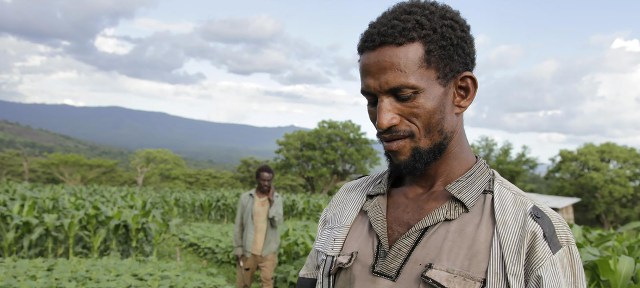
FAO/Tamiru Legesse
Support Our Journalism
We cannot do without you.. your contribution supports unbiased journalism
IBNS is not driven by any ism- not wokeism, not racism, not skewed secularism, not hyper right-wing or left liberal ideals, nor by any hardline religious beliefs or hyper nationalism. We want to serve you good old objective news, as they are. We do not judge or preach. We let people decide for themselves. We only try to present factual and well-sourced news.
Support objective journalism for a small contribution.


