


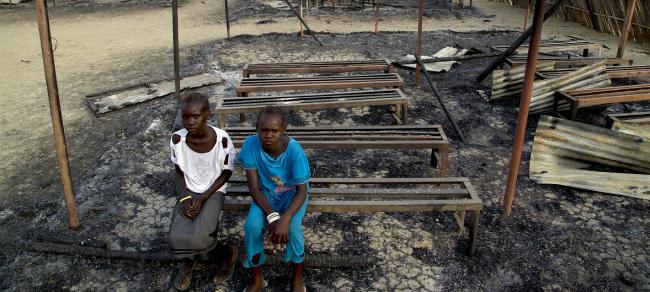
A third of world’s out-of-school youth live in conflict, disaster-affected countries: UNICEF report
New York, Sept 20 (IBNS): Childhood is a time for growth, a time for school. But conflict or disaster are depriving 104 million young people between the ages of five and 17 of that foundation, according to a new study by the United Nations Children’s Fund (UNICEF).
The report, A future stolen: young and out-of-school, looks at the education situation of children and young people from pre-primary to upper secondary age across all countries, including those affected by humanitarian emergencies.
“When a country is hit by conflict or disaster, its children and young people are victimized twice,” said Henrietta Fore, UNICEF Executive Director.
“In the near term, their schools are damaged, destroyed, occupied by military forces or even deliberately attacked, and they join the millions of young people out of school, and as the years progress they seldom return. In the long term they – and the countries they live in – will continue to face perpetuating cycles of poverty,” she elaborated.
The report details that one-in-five youth, aged 15 to 17, who live in countries affected by conflict or disaster have never been in a formal classrom, while two-in-five never completed primary school.
Nearly 303 million youth between ages five and 17, around one-in-five globally, are out of school. One-third of them live in conflict or disaster-affected countries, according to the report launched ahead of the 73rd session of the UN General Assembly.
Moreover, greater than half of out-of-school primary-school-age children live in emergency-affected countries.
It also points out that poverty remains the most significant barrier to education globally, leaving the poorest primary-school-age children four times more likely to be out of school compared to their peers from the richest households.
UNICEF said that with less than four per cent of its global humanitarian appeals dedicated to education, the report calls for more investment in quality education from pre-primary to upper-secondary, in a safe environment within countries affected by complex humanitarian emergencies and protracted crises.
By current trends, there will be more than 1.3 billion youth aged 10 to 19 by 2030 – an eight per cent increase.
“This is a critical moment in history,” Fore said. Providing the future workforce with quality education and better employment prospects will yield greater economic and social dividends, according to the report.
“If we act wisely and urgently, we can empower and skill young people to be prepared to create peaceful and prosperous societies,” the UNICEF chief spelled out.
“The alternative is too bleak. We cannot afford to fail,” she concluded.
UNICEF/Hakim George
Support Our Journalism
We cannot do without you.. your contribution supports unbiased journalism
IBNS is not driven by any ism- not wokeism, not racism, not skewed secularism, not hyper right-wing or left liberal ideals, nor by any hardline religious beliefs or hyper nationalism. We want to serve you good old objective news, as they are. We do not judge or preach. We let people decide for themselves. We only try to present factual and well-sourced news.
Support objective journalism for a small contribution.


