


 Niger Refugee
A refuge from terror in Niger, as UN Chief pledges to be voice for the displaced
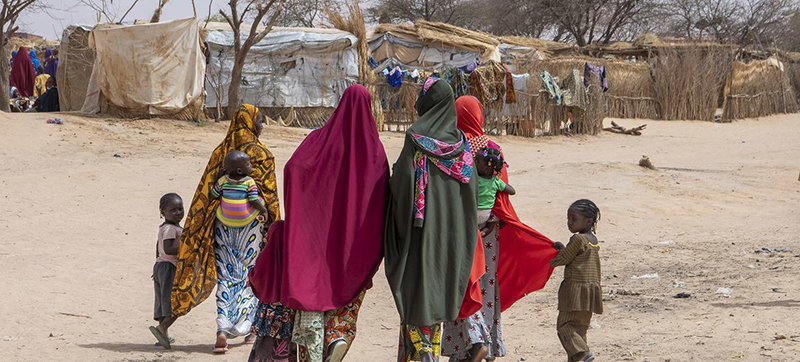
New York: Rows of temporary shelters covered in sheeting which has been blanched by the sun and sand blasted by winds blend into the grey, dusty and parched environment. It’s midday, and temperatures have reached a punishingly hot and dry 44 degrees Celsius (111 F).
This is Ouallam district one of the hottest places in Niger, in one of the hottest countries in Africa, where rain falls rarely and sparingly but where shattered communities can find a refuge from the increasing acts of violence and terrorist activity which have struck the region.
Ouallam and two other neighbouring districts in northern Niger currently shelter some 28,000 people who have fled their homes because of violence, including terrorist acts, in the volatile wider Sahel region of Africa. Around 8,000 have left as refugees from neighbouring Mali to the north and another 20,000 have been displaced from 18 nearby villages and towns.
One of them is Zakou Siddo, a teacher who fled from a village called Mogodiougou, some 80 kilometres from Ouallam.
“Twelve people were killed when my village was attacked on 14 November 2020. Livestock was stolen and our grain stores and some houses set on fire,” adding that “we then decided to flee to Ouallam which is considered safe.”
In Ouallam, Mr Siddou came together with other displaced communities from around the region, who left villages and towns standing empty and schools unattended. Many children had not been to class since 2017.
And they met refugees from Mali, including Aminata Walet Issafeitane, who is president of a Women’s Refugee Committee in Ouallam, and who fled the country of her birth ten years ago.
She tells a similar story of theft and violence. “We are a nomadic and pastoral people and our destiny was changed when armed groups stole our livestock.”
Like many refugees and displaced people, her community faced unprecedented changes. “We have had transform ourselves into sedentary people; we are trying to adapt in spite of the severe drought and lack of water which stops us from growing food; the few animals we have now are unable to find pasture. This makes us all suffer from a lack of food.”
Across Niger, some 80 per cent of Niger’s population of 25 million depend on agriculture to survive.
Microcosm of challenges facing Niger
Ouallam and its surrounding districts is a microcosm of the challenges facing Niger, a landlocked West African country where, according to the UN Refugee Agency (UNHCR), some 264,000 Nigeriens are internally displaced due to a series of factors including deteriorating security and the effects of changing climatic conditions as well as overgrazing and deforestation.
UNHCR says there are also over 250,000 refugees from neighbouring countries in Niger. In March 2022 alone, UN partners reported that more than 17,600 people were displaced into Niger, mostly Nigeriens returning home, but also Malian refugees.
UN agencies and their partners are providing a range of humanitarian and development support across Niger. It’s estimated that 6.8 million people are chronically food insecure and do not get enough to eat, year by year. Low rainfall and attacks in agricultural production areas have once again combined to reduce and limit the amount of food that is grown by farmers.
Despite the combination of crises, the 2022 humanitarian response plan for Niger is only 8.7 per cent funded.
UNHCR says there are also over 250,000 refugees from neighbouring countries in Niger. In March 2022 alone, UN partners reported that more than 17,600 people were displaced into Niger, mostly Nigeriens returning home, but also Malian refugees.
UN agencies and their partners are providing a range of humanitarian and development support across Niger. It’s estimated that 6.8 million people are chronically food insecure and do not get enough to eat, year by year. Low rainfall and attacks in agricultural production areas have once again combined to reduce and limit the amount of food that is grown by farmers.
Despite the combination of crises, the 2022 humanitarian response plan for Niger is only 8.7 per cent funded.
Support Our Journalism
We cannot do without you.. your contribution supports unbiased journalism
IBNS is not driven by any ism- not wokeism, not racism, not skewed secularism, not hyper right-wing or left liberal ideals, nor by any hardline religious beliefs or hyper nationalism. We want to serve you good old objective news, as they are. We do not judge or preach. We let people decide for themselves. We only try to present factual and well-sourced news.
Support objective journalism for a small contribution.


