"Understood tactical losses … rectified: India’s CDS Anil Chauhan on aircraft losses in Op Sindoor
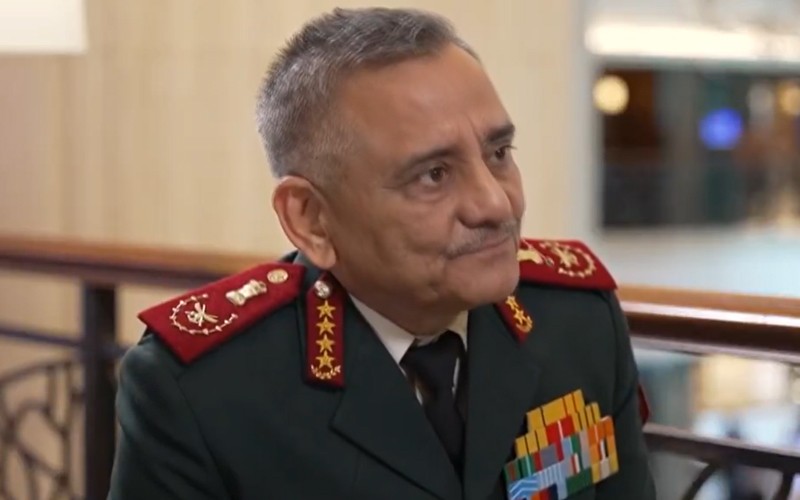
New Delhi: India’s military has, for the first time, officially acknowledged the loss of fighter jets during the armed conflict with Pakistan earlier this May, while strongly denying that the hostilities ever approached the threshold of nuclear war.
General Anil Chauhan, the Chief of Defence Staff of the Indian Armed Forces, made the admission during an interview with Bloomberg TV on Saturday, on the sidelines of the Shangri-La Dialogue in Singapore.
“What is important is that, not the jet being down, but why they were being down,” he said, when asked about the losses.
Although he refuted Pakistan’s claim that it had downed six Indian aircraft—calling the assertion “absolutely incorrect”—General Chauhan declined to reveal the actual number of Indian jets lost in the operation.
"PAK DID NOT DOWN 5-6 INDIAN JETS". While calling out Pak exaggeration, the CDS admits downed Indian jets and focuses on rectified mistakes.
— Rahul Shivshankar (@RShivshankar) May 31, 2025
THE INDIAN MILITARY DOESNT HIDE BEHIND A SMOKESCREEN. pic.twitter.com/2Lhqojsfgm
“Why they were down, what mistakes were made — that are important,” he said. “Numbers are not important,” he added.
Without naming the incident in detail, he acknowledged that the Indian Air Force had managed to recover swiftly from the setback.
“The good part is that we are able to understand the tactical mistake which we made, remedy it, rectify it, and then implement it again after two days and flew all our jets again, targeting at long range,” he said.
This is the clearest acknowledgment to date by a senior Indian military official regarding the fate of Indian fighter jets in the four-day conflict with Pakistan that began on May 7.
Until now, the Indian government had avoided confirming whether any aircraft were lost, even as speculation grew following statements from Islamabad.
Earlier this month, Pakistan’s Prime Minister Shehbaz Sharif had publicly claimed that the country’s armed forces had shot down six Indian jets.
The statement was not independently verified.
India, at the time, remained silent on the claim and offered no official clarification.
The clash, which unfolded along the volatile border between the nuclear-armed neighbours, was the most intense military confrontation between the two countries in nearly fifty years.
The fighting involved a series of air strikes, drone attacks, artillery exchanges, and missile launches.
The trigger was a brutal terrorist attack in Jammu and Kashmir on April 22, in which 26 civilians were killed.
India blamed the assault on Pakistan-based militants and described it as a state-backed act of terrorism, a charge Islamabad denied.
General Chauhan was also asked about U.S. President Donald Trump’s statement that Washington had helped defuse a looming nuclear crisis.
He did not directly comment on Trump’s claim but pushed back against the idea that either side was close to using nuclear weapons.
“I personally feel that there is a lot of space between conduct of conventional operations and the nuclear threshold,” he said.
He added that lines of communication between India and Pakistan had remained open throughout the conflict, and that mechanisms existed to manage escalation.
According to him, on the so-called escalation ladder, there were “more sub-ladders which can be exploited for settling out our issues” without needing to invoke nuclear options.
General Chauhan also addressed claims regarding the use of foreign-supplied weaponry by Pakistan, particularly from China.
He dismissed suggestions that such technology had given Pakistan an edge, saying it “didn’t work.”
A research division under India’s Defence Ministry had earlier indicated that Beijing supported Pakistan during the conflict with air defence systems and satellite intelligence.
Highlighting India’s military capabilities, the general said, “We were able to do precision strikes on heavily air-defended airfields of Pakistan deep 300 kilometres inside, with the precision of a meter.”
Both India and Pakistan have since engaged in diplomatic outreach to shape global perception of the conflict.
General Chauhan said that the ceasefire, for now, is holding, but added that its durability would depend entirely on Pakistan’s behaviour in the weeks and months ahead. “We have laid clear red lines,” he said.
Support Our Journalism
We cannot do without you.. your contribution supports unbiased journalism
IBNS is not driven by any ism- not wokeism, not racism, not skewed secularism, not hyper right-wing or left liberal ideals, nor by any hardline religious beliefs or hyper nationalism. We want to serve you good old objective news, as they are. We do not judge or preach. We let people decide for themselves. We only try to present factual and well-sourced news.
Support objective journalism for a small contribution.