India-Australia seal Nuclear deal
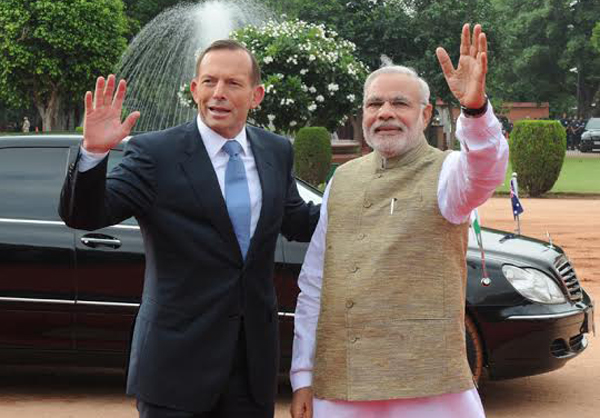
Visiting Australian Prime Minister Tony Abbott met his Indian counterpart Narendra Modi in the capital and finalised an agreement to allow the export of uranium to New Delhi for use in power generation.
The deal marks a second landmark in the nuclear history of India after India signed the civil nuclear pact with USA in 2008.
The two heads of state met in Hyderabad House where they had series of talks regarding bilateral relationship and trade.
India’s chances of getting nuclear fuel from India increased after Canberra lifted a long-standing ban on selling uranium to energy-starved India in 2012.
Since then, both nations started negotiations trying to figure out an amicable safeguards agreement to ensure any uranium exports from Australia are used purely for peaceful purposes.
Australia had earlier refused to sell nuclear fuel to India because it had not signed the Nuclear Non-Proliferation Treaty (NPT).
Ahead of this visit, on Wednesday Abbott said in Australia parliament that he hopes to sign a deal on this tour to sell uranium to India for peaceful power generation.
“I am hoping to sign a nuclear cooperation agreement that will enable uranium sales by Australia to India,” news agency AFP quoted Abbott as saying.
Australian Trade Minister Andrew Robb said his government is “satisfied” with India’s safety efforts.
Australia is world's third-largest producer of uranium. According to experts, the deal will ease power-starved India’s search for replacement fuel.
According to recent Nuclear Power Corporation of India Limited (NPCIL) statistics, India operates 20 mostly small reactors at six sites with a capacity of 4,780 MW, or 2 per cent of its total power capacity.
The government hopes to increase its nuclear capacity to 63,000 MW by 2032 by adding nearly 30 reactors - at an estimated cost of $85 billion.
India's status as a nuclear power features highly among new Prime Minister Narendra Modi's priorities.
During the meeting on Friday, PM Abbott gifted a 'Nehru jacket' made of Australian wool to PM Modi, who in return presented him a copy of the Bhagwad Gita.
“Grandest welcome I've ever received,” media quoted Abbott as saying to India’s foreign Minister Sushma Swaraj.
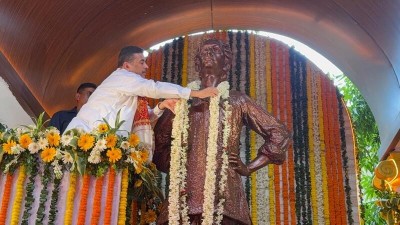
Earlier, Abbott visited Rajghat and India Gate to lay wreath before visiting Rashtrapati Bhawan where he was given ceremonial reception.
Support Our Journalism
We cannot do without you.. your contribution supports unbiased journalism
IBNS is not driven by any ism- not wokeism, not racism, not skewed secularism, not hyper right-wing or left liberal ideals, nor by any hardline religious beliefs or hyper nationalism. We want to serve you good old objective news, as they are. We do not judge or preach. We let people decide for themselves. We only try to present factual and well-sourced news.
Support objective journalism for a small contribution.