 Canada
Growing Khalistani shadow in Canada
In a nation that prides itself on diversity and inclusivity, recent events in Surrey, BC, demand a closer look at where multiculturalism intersects with public safety.
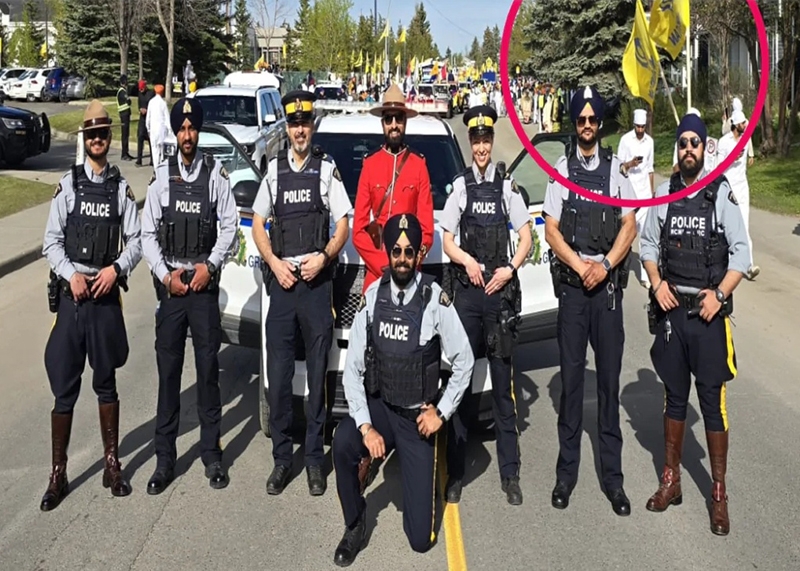
The sight of Sikh police officers participating in swordplay at a religious gathering would ordinarily be an encouraging example of cultural integration, a celebration of heritage within the broader Canadian heritage.
However, when Khalistani flags fly in the background, the narrative shifts alarmingly.
It raises urgent questions about whether these officers, sworn to uphold the law impartially, can do so while appearing to support a separatist movement with a dark and violent history.
Let’s be clear: the presence of Khalistani flags in any context is not a benign cultural symbol.
It represents a political ideology linked to extremism, one that has been responsible for significant acts of terror, including the worst in Canadian history—the Air India Flight 181 bombing, which claimed 329 innocent lives.
The painful memory of that atrocity still lingers, a grim reminder of the deadly consequences of allowing extremism to fester unchecked.
This is not about questioning the loyalty of Sikh Canadians or their right to practice their religion.
Sikh officers, like all others, have every right to attend religious ceremonies and engage in cultural practices.
But public confidence in law enforcement depends on the perception—and reality—of neutrality.
When officers are seen under the banners of a movement tied to extremism, it corrodes trust and raises valid concerns about their ability to act as impartial enforcers of the law.
Would we tolerate officers openly participating in events where symbols of white supremacy or other hate-driven ideologies are displayed? The answer is a resounding no. The same standard must apply here. Canada cannot afford to downplay or dismiss the threat posed by Khalistani extremism simply because it operates under the guise of a cultural or religious cause.
Moreover, the recent escalation in threats against Hindu temples in Surrey should not be ignored. The community has the right to question whether law enforcement is equipped—or even willing—to protect them from this rising tide of hostility. Public safety is not an abstract concept; it’s a lived reality that demands unwavering commitment from those who serve and protect.
It’s time for Canada to confront this uncomfortable reality. Multiculturalism is a strength, but it must never become a shield for extremism. We need clear guidelines to ensure that police officers, while embracing their cultural identities, do not compromise the principles of justice and fairness that underpin their duties. Political symbols tied to violence have no place in law enforcement settings, period.
The stakes are too high for complacency. We owe it to the victims of past atrocities, and to all Canadians, to demand better from those entrusted with our safety.
Trust in our institutions is not a given; it must be earned and maintained. And when that trust is shaken, it is the duty of leaders at all levels to restore it—swiftly and decisively.
(Image and text courtesy: Khalsavox.com)
Support Our Journalism
We cannot do without you.. your contribution supports unbiased journalism
IBNS is not driven by any ism- not wokeism, not racism, not skewed secularism, not hyper right-wing or left liberal ideals, nor by any hardline religious beliefs or hyper nationalism. We want to serve you good old objective news, as they are. We do not judge or preach. We let people decide for themselves. We only try to present factual and well-sourced news.
Support objective journalism for a small contribution.