


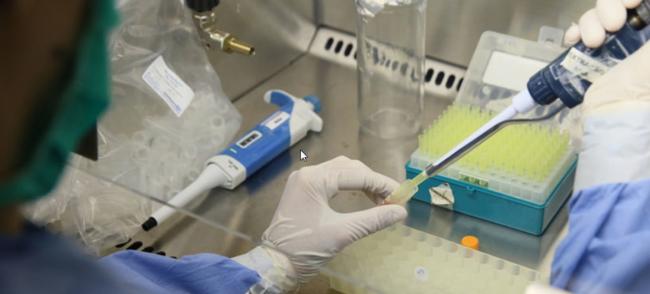
UN health agency launches new diagnostic tool to ensure effective treatment
New York, May 16 (IBNS): Although correctly identifying disease is essential for successful treatment, many have no way of accessing an accurate diagnosis, the United Nation health agency said on Tuesday, launching new tool to close this critical gap.
“An accurate diagnosis is the first step to getting effective treatment,” said Tedros Adhanom Ghebreyesus, Director-General, of the World Health Organization (WHO).
“No one should suffer or die because of a lack of diagnostic services, or because the right tests were not available,” he added.
WHO’s first “Essential Diagnostics List” - a catalogue of the tests needed to diagnose the most common conditions as well as numerous diseases deemed to be a “global priority” - concentrates on in vitro tests, such as blood samples or urine specimens.
The list contains more than 100 products involving 58 tests for detecting and diagnosing a wide range of common conditions; and providing an essential package for screening and managing patient care.
Other tests are designed to detect, diagnose and monitor “priority” diseases, such as HIV, tuberculosis, malaria, hepatitis B and C, human papillomavirus and syphilis.
Some tests are particularly suitable for primary health care facilities, where laboratory services are often poorly resourced or even non-existent, said WHO. For example, tests that can rapidly diagnose a child for acute malaria, or glucometers to test diabetes, do not require an electrical charging or trained personnel.
Other tests are more sophisticated and suitable mainly for larger medical facilities.
“Our aim is to provide a tool that can be useful to all countries, to test and treat better, but also to use health funds more efficiently by concentrating on the truly essential tests,” said Mariângela Simão, WHO Assistant Director-General for Access to Medicines, Vaccines and Pharmaceuticals.
“Our other goal is to signal to countries and developers that the tests in the list must be of good quality; safe and affordable.”
For each test category, the list specifies the type of test, intended use, format and - if appropriate - for primary care or health facilities with laboratories.
The list also provides links to WHO Guidelines or publications and, when available, to prequalified products, as well as a reference point for countries to update or develop their own list of essential diagnostics.
To benefit patients, Governments must ensure appropriate and quality-assured supplies, trained health care workers and safe use. WHO will support countries as they adapt the list for local context.
WHO will update the list on a regular basis and add categories to the next edition. It will expand over the next few years as it incorporates other important health challenges; including antimicrobial resistance, emerging pathogens, neglected tropical diseases and additional noncommunicable diseases.
WHO/PAHO
Support Our Journalism
We cannot do without you.. your contribution supports unbiased journalism
IBNS is not driven by any ism- not wokeism, not racism, not skewed secularism, not hyper right-wing or left liberal ideals, nor by any hardline religious beliefs or hyper nationalism. We want to serve you good old objective news, as they are. We do not judge or preach. We let people decide for themselves. We only try to present factual and well-sourced news.
Support objective journalism for a small contribution.


